Showing posts with label Rock'n'Roll. Show all posts

Thursday, September 6, 2007

SHE'S A REBEL: Decades Of Songs Influenced By The GIRL GROUPS


...with World-Spanning Music Player!
(Part 2 of 2)

_____

Ronnie's spectre:
Amy Winehouse.

RockSex
now brings you the actual, all-inclusive history of Rock'n'Soul music, with Music Players.

Music Player Checklist


Spotify playlist title=
GIRL GROUPS: Disciples 1962-Today
This is a Spotify player. Join up for free here.

*(This Player is limited to the first 200 songs.
Hear the unlimited Playlist here.)


This Music Player covers the many songs directly influenced by the '60s GIRL GROUP sounds, across all music styles from 1962 to today, in chronological order.

Beat! Garage! Psychedelic!
Rock! Soul! Songwriter!
Punk! Funk! New Wave!
TripHop! Indie! World!


Part 1 (of 2):
YOU DON'T OWN ME: The Uprising of the 1960s GIRL GROUPS


___________________


Will You Still Love Me Tomorrow?:
The legacy of the Girl Groups


"To live my life the way I want/
To say and do whatever I please."


From the beginning, it was the harmony and the rhythm.

During the first Rock'n'Roll years, Doo Wop led the congregation in the harmonies department. This was an outgrowth of gospel elder groups like The Dixie Hummingbirds and The Blind Boys Of Alabama, their dulcet rounds now sung by secular teens to woo dates. But just as essential were classical chorals, celtic folk ballads, romantic serenades, swing orchestra hits, torch songs, and scat-jazz mavericks for extending that palette.

Doo Wop isn't male, and there were plenty of does singing do-re-mi, too. Women sang with sisters (Shirley Gunter And The Queens, The Chordettes), with brothers (The Platters, Los Cinco Latinos), and around the world (Hermanas Navarro). At the time it was all thought of as vocal music (and Rock'n'Roll) made by and for everyone; the problem with retroactive genre terms like Doo Wop and Girl Group is that they are meant to distinguish music patterns, but only segregate the players by gender absolutes and miss the true interconnectivity of human culture. But it's all just humans making harmony with rhythm.

Diana Ross,
in designs by André Courrèges (1966).


Groups of girls like The Shirelles, The Chiffons, and The Blossoms swelled over into the early '60s while the original Rock'n'Roll treaded growing pains.> Their harmonic unity, now shifting from doo wop constraints into pure upbeat pop, stood out. These tight, punchy pop songs, with their youthful zest and bold choruses radiant through transistor radios, were more compressed and modern, with a sass and punch that the recent past had only predicted. This sound had its head in the sun with its feet square on the rhythm. At the same time, designers like Mary Quant and André Courrèges were revolutionizing fashion for the modern girl, with a Mod aesthetic now streamlined, bold, and free to move. A new generation of girls came into the future feeling regenerated. It was the Jet Age and this was their coming out music.

But music is the language of every heart and boys loved it, too. Girl Group sounds permeated every airwave, jukebox, dance, and ear, and moved everyone. What gets forgotten is that this vocal pop was just considered Rock'n'Roll and was reflected back accordingly, from the British Invasion onward. From the early '60s to today, in every variant of Rock around the world, those sounds have never stopped resounding.

This Music Player details how those specific Girl Group sounds -big productions, soulful dance, and choral harmonies- reverberate through all kinds of music directly to this day, in many surprising ways that challenge and expand the general narrative.


The Beatles with Mary Wells.

This sound had a bracing effect on The Beatles, who were as intoxicated with this new music as the older rockabilly of their heroes. They covered three of them on their debut 1963 album alone: The Cookies' "Chains", and The Shirelles' "Boys" and "Baby It's You". Soon they followed with The Marvelettes' "Please Mister Postman", The Donays' "Devil In His Heart", Peggy Lee's "Till There Was You" (via the 'The Music Man'), and the live BBC take on Little Eva's "Keep Your Hands Off My Baby".

They insisted on meeting The Supremes, who responded in kind with their own A Bit of Liverpool covers album. They wrote hit songs for compatriots like Cilla Black and Mary Hopkin, and asked Jackie DeShannon and The Ronettes to tour with them. The Shangri-Las' "Remember (Walking In the Sand)" may have had a profound effect on John; its heavy descending chords and echoed wash of harmonies bear a certain kinship to his later "I Want You (She's So Heavy)". Also, George signed Doris Troy ("Just One Look") and Ronnie Spector to Apple Records. This kind of affection came back to haunt him when he unconciously based "My Sweet Lord" on "He's So Fine" by The Chiffons, which became a legal migraine. When John and Paul broke as partners, they each went forward singing with their life partners, Yoko and Linda.

The Ronettes
with Phil Spector and George Harrison.

The British Invasion reflected America back to itself, often with loving covers that they hadn't heard in the first place. The Moody Blues broke through with Bessie Bank's "Go Now", The Hollies with Evie Sand's "I Can't Let Go", The Searchers with DeShannon's "Needles and Pins" and "When You Walk In the Room", and The Animals immortalized Nina Simone's "Don't Let Me Be Misunderstood". The Yardbirds brought the fuzzy snarl to The Shirelles' "Putty In Your Hand". Manfred Mann chanted The Exciters' "Do-Wah-Diddy". Lesser known bands did great glosses as well, such as The Action's "I'll Keep On Holding On" (The Marvelettes).

Every singer loved a good song. So this went both ways, of course, with Dionne Warwick and Sandie Shaw covering "There's Always Something There To Remind Me" (Lou Johnson), The Shangri-Las sighing "He Cried" (Jay And The Americans), and Aretha Franklin swinging "Eleanor Rigby". Culture is conversation, not monologues or doctrine.

Globally, the Girl Group sounds immediately reverbed revamped by cover versions in the native tongues of Los Pekenikes (Spain), Sylvie Vartan and Ray Anthony (France), Helena Vondrackova (Czech), Equipe 84 (Italy), Las Mosquitas (Mexico), Les Bises (Canada), and patois of Laurel Aitken (Jamaica).

Girl Group, particularly in Phil Spector productions, had a grandiose sound and declarative heart; these full orchestras and fuller lungs breathed new bredth into Rock'n'Roll beyond tuff licks and swivel hips. And the vocal group sound became far more fluid with Brian Wilson's productions of The Beach Boys and The Honeys, whose love of The Ronettes' "Be My Baby" led to Spector-esque songs like "Don't Worry, Baby", "Help Me, Rhonda", "Then I Kissed Her" (The Crystals), "Darlin'", and Glen Campbell's "Guess I'm Dumb". And, by extension, albums like The Beach Boys' Pet Sounds and The Beatles' Sgt. Pepper turned that string-pop into progressive Rock.

Brian Wilson; Janis Joplin; Isaac Hayes.

The latter '60s retained the GG refrain within new contexts and outlooks, such as Janis Joplin offering up "Piece Of My Heart" (Erma Franklin), Vanilla Fudge expanding the hell out of "You Keep Me Hanging On" (The Supremes), and Isaac Hayes striding Dionne's "Walk On By" into a twelve minute orchestradelic opus.

By this point, the counterculture musical HAIR (1968) parodied the conventions of the girl groups genre: "Frank Mills" is a biker whose friend "resembles George Harrison of The Beatles" who rips off an adoring debutante; and "Black Boys/ White Boys" mocks the 'color line' with chocolate and peach soul sisters appraising each other's delectability. (Girl Group would get additional ribbing and respect in later musical productions like GREASE and HAIRSPRAY, and inspire fictional takes on The Supremes like DREAMGIRLS and SPARKLE.)

Aretha Franklin; HAIR original soundtrack; Carole King.

One Girl Group vet changed the music industry in the '70s with one album. Carole King, architect of so many GG classics like "Will You Still Love Me Tomorrow?", redefined herself as a singer-songwriter with her 1971 Tapestry album. Concurrent with the rise of early '70s feminism, it became one of the best-selling albums of all time. If Dylan had wanted to kill the Brill Building, he really just liberated them to become him. King's success as a troubadour solidified the industry clout of songwriter cohorts from Joni Mitchell to Patti Smith, Bette Midler to Helen Reddy, Carly Simon to Norah Jones, Tori Amos to Alicia Keyes. Meanwhile, her perverse inverse Laura Nyro was pushing the envelope into origami with her acrobatic chorales, alone and with Labelle, loosing kindred dissenters like Annette Peacock, Diamanda Galas, and Bjork.

Most hard-rocking 1970s jams were built on blues grooves with soul vocals. Many times they recovered GG-era songs they loved in this style. Smith amped up "Baby, It's You". Linda Ronstadt punched through with "You're No Good" (Betty Everett} and "Just One Look" (Doris Troy}. Bob Seger slipped the flip on "Come To Papa" (Koko Taylor's' "Come To Mama"). The Doobie Brothers turned soul sister covering "Take Me In Your Arms (Rock Me A Little While)" by Motown's Kim Weston.

New York Dolls.

The biker chick and epic heartbreak persona of The Shangri-Las had mammoth impact still in the Glam era. The New York Dolls actually wanted to be them in a carnal tryst with The Stones, and their wardrobe and setlist proved it. They swiped the line "When I say I'm in love, you best believe I'm in luv, L-U-V!" for their "Looking For A Kiss", even enlisting George "Shadow" Morton to produce their first album.

Aerosmith furthered this adulation with their remarkably faithful cover of "Remember (Walking In the Sand)", while also subtly recalling "I Want You (She's So Heavy)". The Runaways rocked as hard as anyone, while -like Queen and Heart- still retaining excellent and accomplished harmonies; their Juvie jailbreak saga in "Dead End Justice" rings with Shangri-Las drama.

Joan Jett, Debbie Harry, David Johansen, Joey Ramone.

The first Punk single in England, The Damned's 1976 "New Rose", nicks its opening line "Is she really going out with him?" from The Shangri-Las' "Leader of the Pack", while Joe Jackson had his first hit expanding that same phrase into a new song. Blondie's debut album is steeped in beat rhythms and girl group harmonies. Their first single, "X-Offender", updates dream romance songs to the sordid realities of '76 Times Square, tongue firmly in cheek. They even covered "Out In the Streets" so well many think it's their song. The Ramones remembered Rock'n'Roll radio with "Baby, I Love You" (The Ronettes) and "Needles and Pins" (Jackie DeShannon). Nikki And The Corvettes, their sonic sisters, were full of biker chick sass in a whole new level of risque.

Punk and feminism likewise played games with the archetypes of Girl Group songs. Joan Jett gave it her all earnestly reciting the identity manifesto "You Don't Own Me" (Lesley Gore). But others mocked all the stock sentiments of teenage rapture and naive love as outdated, such as D-Day's "Too Young To Date" ('79), Suburban Lawns' "Gidget Goes To Hell" ('79), Hollie And The Italians' "Tell That Girl To Shut Up" ('81), and Josie Cotton's infamous send-up of stoic bikers, "Johnny, Are You Queer?" ('82).

The B-52's:
Fred Schneider, Ricky Wilson (kneeling), Keith Strickland, Kate Pierson, Cindy Wilson.

A bouffant hairdo was a called a 'B-52' in the southern US, which was probably as bulletproof as the plane from hairspray. The influence of mid-'60s pop, beat, soul, and girl party records on the Athens band The B-52's was astronomical. Their 'dance-or-dance-more' ethos was a deliberate tonic to the descending negativity that punk and postpunk were slipping into. Be fun, and unashamed! The glowing spirit of the girl group era strobes through "52 Girls", "Give Me Back My Man", "Love Shack", and their soused cover of "Downtown" (Petula Clark).

As the '80s re-embraced Motown, the jaunty beat of "You Can't Hurry Love" paraded through new songs by Iggy Pop, Elvis Costello, The Jam, Katrina And The Waves, and The Smiths. Motortown revved the circuits in Soft Cell's synthpop medley of "Tainted Love" (Gloria Jones) and "Where Did Our Love Go?" (The Supremes). In the same spirit, Naked Eyes covered Bacharach's "Always Something There To Remind Me".

Siblings are doing it for themselves:
Aretha Franklin, Annie Lennox, Dave Stewart.

UK soul artists crested anew throughout the New Wave years. Annie Lennox had broke through covering "I Only Want To Be With You" (Dusty Springfield) with The Tourists, and her Eurythmics work shimmered with shades of Dusty, Aretha, and Francoise. ABC, Culture Club, Sade, Simply Red, Bananarama, Paul Young, Alison Moyet of Yazoo/YAZ, and Andy Bell of Erasure, are among myriad next generation UK artists who were deeply rooted in the soulful pop of the '60s. Under the '80s synth sheen beat the heart of Motown and Memphis. This rolling tide continues on lately with Amy Winehouse, Adele, Duffy, Dionne Bromfield, and Alice Russell.

Phil Spector produced the Ramones' End Of The Century (1980), while his style haunts The Clash's "The Card Cheat" and Jesus And Mary Chain's "Just Like Honey". And would Frankie Goes to Hollywood, Art Of Noise, Public Enemy, and My Bloody Valentine ever have been as epic and densely-layered without the sonic example he set in motion with GG music?

The Girl Groups inspired The Beatles who inspired groups of girls. There were many female bands pounding out Beat music with gossamer harmonies in the '60s. In the mid '80s, a new wave of the Girls In The Garage cycled back with engines revving in The Visible Targets, The Go-Go's, The Bangles, The Pandoras, The Delmonas, and Les Calamites.

Besides Motown jaunt and Beat sunshine, Girl Group also encompassed angel girls with luminous harmonies in dense moodscapes. Elizabeth Fraser and Cocteau Twins now blendered this into a mesmerizing maelstrom of darkness and light, hinging toward Shoegaze and TripHop to follow.

Julee Cruise; esiurC eeluJ.

David Lynch lives in dreams, where events blur, meanings change, and mystery is life's breath. He revels in ethereal light and supple darkness. He also seems haunted by purity that has become a memory. The effect that girl group songs in the vein of "I Love How You Love Me" and "Dressed In Black", coupled with the spectral highs of The Everly Brothers and Roy Orbison, had on him seeded BLUE VELVET (1986) and flourished entirely in TWIN PEAKS (1990), thanks to the soundtracks of Angelo Badalamenti. With Julee Cruise he had his 'dreamscape girl', even literally spotlighting her as both a siren songbird and a biker chick on the town bar's stage. She is both a memory and a prophecy, intangible but palpable.

Portishead; Garbage; The 5.6.7.8's.

'60s drama divas like The Shangri-Las, Jackie Trent, and Shirley Bassey had shone lucent within thunderstorm orchestras. Big cinematic production with eerie female vocals returned in the mid-'90s with TripHop, a hybrid of John Barry scores, hiphop beats, and Cocteau ambience, with artists like Portishead, Garbage, Bjork, Mono, Hooverphonic, and Goldfrapp.

Spector production, dynamic confession, and dreamy chorales bewitched all people across all borders in the '60s, and -as borne out on this Music Player- continued to do so across every decade and style. It is just as vibrant today in the music that matters.

Radically eclectic artists share this influence in common, and have been happy to reflect it. You can clearly hear it in the selected tunes here: in the Garage of The White Stripes, The Raveonettes, The Gore Gore Girls, Hunx And His Punx, The Love Me Nots, and Bleached; in the Indie Pop of Cults, Girls, Sleigh Bells, Panda Bear, Dum Dum Girls, La Luz, Best Coast, and Diane Coffee; in the harmonies of Lady, Stooche, The Girls At Dawn, Janelle Monae, The She's, and Baby Shakes; and in the variant soul of Shelby Lynne, Amy Winehouse, Valerie June, Kelis, and Father John Misty.


The Raveonettes; The Love Me Nots; Latasha Lee.

_____


Girl Groups aren't the history of the Women In Rock, they are more specifically a valuable facet within that vast prism.

Women have been a part of every permutation of Rock from the beginning, as eclectic and vital to its progressions as their brothers. (If any source tells you differently, they are lying or ignorant.)

Girl Group was a loose term generally appraising the female vocal pop of the early '60s and its highly dynamic production values. At its best it was meant as an appreciative term of respect. At its worst it is a genderist pigeonhole that reduces all female musicians to eyecandy making soft Pop apart from Rock. Depends on the clear insight or clouded projection of the viewer.

So Girl Group isn't Barbies miming dance tracks. Girl Group isn't pretty-twenties with a sell-by date. In the real world outside that sexist cartoon, women have been a thriving part of every movement of music, a sonic inspiration for everyone, and an exponential wave that can't be contained. All the myopic critics, robot radio, daft downloaders, and J-Pop factories in the world can't dam that ocean.

(A separate series of posts will cover the larger history of WOMEN OF ROCK, decade by decade, in every style from the '20s to today.)

This essay and Music Player instead focuses on the specific influence of the actual, original Girl Group sound on all who followed. It makes it clear that the success of the 'girls grouped' unleashed the floodgates of singer/songwriters, punk poets, soul sisters, and riot grrrls that followed, with its clear sonic influence still audibly inherent within. From the refurbished vocal combos like The Emotions, The Pointer Sisters, Labelle, and En Vogue; to funk fatales like Parlet and Brides Of Funkenstein, Tom Tom Club, Mary Jane Girls, and Peaches; (and, admittedly, to Mtv dance divas like Debbie Gibson, Tiffany, The Spice Girls, Britney Spears, TLC, and Destiny's Child that inherit the generic term Girl Group); to full-on garage grrrls like Fanny, NQB (Sweden), The Pandoras, Bikini Kill, The 5.6.7.8.'s, April March, The Husbands, and Bleached.

This is dedicated "To Her, With Love".


© Tym Stevens


See Also:

Part 1 (of 2):
YOU DON'T OWN ME: The Uprising of the 1960s GIRL GROUPS

_____________________


THE RUNAWAYS, And Why Women Of Rock Are Essential!

WOMEN OF ROCK: The 1950s, with 2 Music Players!
, with Music Players!
WOMEN OF ROCK: The 1960s, with 2 Music Players!


_____________________


The Shangri-Las > The Damned > Joe Jackson

LADIES FIRST: "Out In the Streets" - The Shangri-Las > Blondie

LADIES FIRST: "Remember (Walking In The Sand)" - The Shangri-Las > The Beatles > Aerosmith > Amy Winehouse


The Real History of Rock and Soul!: The Music Player Checklist


Thursday, August 30, 2007

The Pedigree of PETER GUNN

...with Massive Music Player!

RockSex
now brings you the actual, all-inclusive history of Rock'n'Soul music, with Music Players.

Music Player Checklist


Spotify playlist title=
PETER GUNN
This is a Spotify player. Join up for free here.


This Music Player contains 5 hours of covers, clones, and cousins of "Peter Gunn",
from 1958 to today in chronological order, spanning all musical genres.


The Pedigree of PETER GUNN


"Louie Louie" is a riff that underlines the whole history of Rock'n'Roll, and "Peter Gunn" shadows it on the same trail.

It was created by unusual supsects who would become the world's most wanted. Writer/director Blake Edwards created the 1958 TV show, bringing in Henry Mancini to compose the themes, who cloaked the worldly detective in a jazz-noir score of torrid sax and motor engine riffs. (They went on to make their fame with the Pink Panther films.) The pianist on the sessions was future film composer John Williams.>

It was a surprisingly sophisticated and yet street-lethal score for the fresh new world of television. In fact, with its liberal use of West Coast free jazz, it opened the door for using Jazz in movies and television from then on. The bestselling soundtrack became a hinge into modern jazz for mainstream audiences. And its fusion of dramatic intrigue and brashly sensual bop created the Crime/Spy Jazz sound, paving the grooves for the soundtracks of James Bond and all his clones.

More immediately, it captured the dangerous allure of the modern city in the fantasies of young people nationwide.

Craig Stevens (r), starring as Private Eye "Peter Gunn".


Most of all, it was the power of that striding strain that arrested their attention. "Peter Gunn Theme" was the sound of walking cocky, punching felons, chasing roadsters, talking cool, and entangling hot. It was steamy and unseemly, a grinding prowl, a hungry stare, a hip-grinding dance. It was the entirety of the forbidden side of adulthood that teenagers ached to have. "The Peter Gunn title theme actually derives more from rock and roll than from jazz," Mancini clarified.

Rock'n'Roll guitarist Duane Eddy snuck his way into the club first. His twang-bar style, with its extra heavy reverb, amped the walking bassline into a tougher strut on his 1959 cover version. While Mancini's was sassy horns swinging in a hot nightspot, Eddy's was horny young nightowls on the prowl down midnight tarmac. At least in teen fantasies, it was a sidedoor into the sleazy twilight underworld they longed to slink into. The hard clang instrumentals of Duane Eddy and Link Wray ushered in Dick Dale and Surf guitar, which kept the edgy heart of Rock'n'Roll alive into the British Invasion.

Duane Eddy; Sarah Vaughan; Dick Dale.


Beyond simply the riff, the moody sound evoked by Eddy mutated into a shroud of instant atmosphere. For instance, the mid-60's English bands The Lost Souls ("This Life Of Mine") and The Syndicats ("Crawdaddy Simone") aren't playing "Gunn" specifically, but their songs are clearly rewrites of its chords and sound. Same thing for instrumentals by Freddie King ("Hide Away") and James Brown ("The Scratch"). When The Monkees broke free of their producer to play on their own records, the first thing they tried was a shambling pastiche called "Peter Gunn's Gun". Its status as a standard in any upstarts' repertoire carried it through the rehearsal holes of the world. Somebody somewhere would always don its instant cool, no matter whether honest or bootleg. Jazz queen Sarah Vaughn sang a lyrical version called "Bye, Bye" in '64. Dick Dale, Jimi Hendrix, and myriad garage bands donned its trenchcoat for some midnight rambling.

In the 70's, as rock began rebelling against its overblown indulgences, the tight riff became crucial. It was like cutting to the chase with a switchblade. Boston's Jonathan Richman had admired the lethal lyrics and blunt buzz of the Velvet Underground; he and the Modern Lovers trawled the city's dusky deadends in Peter Gunn's roadster in 1974's "Pablo Picasso". (This song is most remembered for its immortal lines, "Pablo Picasso was never called an a$$hole/ not like you.") His terse hum would soon transport punks.

X-Ray Spex; The Cramps; The B-52's.


For punkers, this edgy sordid nightscape was their reality. It became a theme song where the usual suspects were now the heroes. You can detect it in the surging buzz of X-Ray Spex's "The Day the World Turned Day-Glo" in '78. The Cramps crimped that stalking stocatto for their mix of pychobilly, garage, and horror movies by mutating it into 1979's "Human Fly". Duane's rival, the original psychobilly Link Wray, sprungload it with new edge in his "Switchblade", with punkabillies nodding in approval. The B-52's relay that riff into an alien signal via throbbing satellite with 1979's "Planet Claire", cut through with the stabbing clang of silver surfer Ricky Wilson.

The Blues Brothers; Nina Hagen; REPO MAN soundtrack.


The BLUES BROTHERS movie (1980) may have done more to expose the song to a new generation that any other source; their version is fueled by the guitar of Steve Cropper and bass of Duck Dunn, of the legendary Booker T And The MG's. Conversely, out in some bleak no man's land, Bruce Springsteen hears it on his dashboard as "Mr. State Trooper", burning through the ebon byways with some bad menace in his heart. His stripped down acoustic seethes like a harrowing confession before something terrible happens. Also in 1982, German alien Nina Hagen germinated the riff with Captain Beefheart's rasp, quotes of Bowie's "Ziggy Stardust", and cascades of cosmic clang and shrill in "Iki Maska".

The title theme of the 1984 REPO MAN film, by Iggy Pop, has definite treadmarks of Peter's ride. To underscore the point, fellow acolytes Burning Sensations repo-ed Richman's carriage, putting a Duane Eddy kit on it in their "Pablo Picasso" cover for the same movie. This version is so popular that many thought it was the original.

The shamus haunts the darks of Bauhaus' "Hair Of The Dog", Front 242's "Body To Body", and L7's "Uncle Bob". Grandmaster Flash and Tthe Furious 5 flipped fresh spin on the theme with "Style (Peter Gunn's Theme)", where Flash honed back in on the horn riffs. The British Art Of Noise chopped that HipHop with some orchestral flourish, congas, and the hard twanging strut of the actual Duane Eddy himself in their "Peter Gunn", an alternative dance smash in 1986. Aussie rebels Midnight Oil called in the lawman's ghost to bust its country's guilty conscience over issues of Aboriginal land-rights with "Beds Are Burning", with the riff's phantom flickering through their 1988 breakthrough hit. (There's also brief chops of Chuck Berry's "Little Queenie" in there, too.)

The TWIN PEAKS soundtrack by Angelo Badalamenti.


Much of Mancini's original score haunted Angelo Badalamenti's brilliant music for the TWIN PEAKS TV series (1990); the clanging reverb takes possession of the title theme, while the fingersnapping hipster jazz tunes take their cues from Mancini tracks like "Brief and Breezy". Poison Ivy, the axe-slinging dominatrix of The Cramps, claims to own about every cover of "Peter Gunn" ever made; she puts her stiletto all the way through the floorboards in her ultimate version. Covertly, Peter dogs the footsteps of '90s era songs by Living Colour, Diamanda Galas, and The A-Bones.

England's vastly underrated Elastica, known for their chop shop tricks, trysted Peter with The Beatles' "And I Love Her" for a scintillating twist in their fuzzy stomp, "Love Like Ours" (2000). Iggy & the Stooges refueled their reunion in 2003 cruising Peter's night haunts with "Skull Ring", skewering the mugging partystars and glampires who have gentrified his beat. It's the propulsive bassline of The Strokes' "Juicebox" (2005). On the eternal trail, the flatfoot still pounds the beat of The Come Ons, Los Explosibvos (Mexico), and Django Django.


Have riff, will travel. That memorable hook and the atmosphere that surrounds it always resonate beyond the moment, transporting anyone who ever hears it, and forging new paths into the future.


© Tym Stevens


See Also:

The Legacy of LOUIE LOUIE, with Music Player!

Shock Waves: How SURF MUSIC Saved Rock'n'Roll!, with 2 Music Players!

JOHN BARRY: The Influence Of The JAMES BOND Sound On Pop Music, with 2 Music Players!

_____________________


John Barry > Fatboy Slim

"Misirlou!" -The Deep History of Dick Dale's Surf Classic


Thursday, August 23, 2007

The Legacy of LOUIE LOUIE

...with Epic Music Player!


RockSex
now brings you the actual, all-inclusive history of Rock'n'Soul music, with Music Players.

Music Player Checklist


Spotify playlist title=
LOUIE LOUIE
This is a Spotify player. Join up for free here.


This Music Player contains 11 hours of covers, clones, and cousins of "Louie Louie",
from 1957 to today in chronological order, spanning all musical genres.


The Legacy of LOUIE LOUIE


Sometimes a single song is the refrain. You can group music by genres or eras, but one song can tie all of them together. Or even one riff.

In 1957, Richard Berry created one of those. His ode to Jamaican love was inspired by a few surprising sources: a variant of a Cuban Mambo song called "Cha Cha Chá Loco", and Chuck Berry's "Havana Moon" (which had in turn responded to the brief Calypso boom after "Day-O" broke big). It was a regional hit around San Francisco and made its way into many West Coast 45" collections and jukeboxes. It had a lurching stairstep riff that kids had gone crazy for, one that stuck to your brain and feet.

Richard Berry; The Kingsmen.


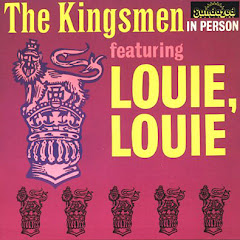
Up in Seattle, where cold and rain made the emerging early '60s rock'n'roll courser, bands battled each other for supremacy in frats, bars, and proms. Someone latched onto "Louie Louie" and then everybody had to. But The Kingsmen stumbled into the studio first, one day before their rivals Paul Revere And The Raiders. In their haste, they didn't know it well enough. The singer slurred the words to hide it and his false starts after the bridge got left in. The riff lost a beat and became the classic 1-2-3/ 1-2, 1-2-3/ 1-2 that made it The Riff. That arresting combo of jang-ing riff and sloppy attitude built the Garage of the future. It also got them investigated by the FBI on suspicion of slipping obscenities into the unintelligle lyrics.

Great riff + Attitude + Controversy = cultural phenomenon.

In comes imitation and mutation, the catalyst of all culture. There's a moment in music where a riff becomes a general rhythm, and a bedrock for new songs.

It sure stuck in its originator's mind, because Richard Berry did one of the first clones of his own song with 1960's "Have Love Will Travel". His original was a splice, and now that the chords have now become standard chops in any band's repertoire, the re-splicing by his followers begins. East L.A. Mexican rockers The Premiers used the riff under their cover of a different song, "Farmer John". The Trashmen combined both songs openly as "Farmer Louie". The Bobby Fuller 4 medley-ed the two together right into their own clone, "Jenny Lee". Wayne Fontana And The Mindbenders' "The Game Of Love" trysted the Bo Diddley beat into the middle.

Meanwhile, Surf naturally caught the wave, such as "Surfin' Louie" by The Shockwaves and The Surfaris' "Go Go Go For Louie's Place". Fresh from "My Boyfriend's Back", the girl group The Angels went tough chick with it, even preserving the false start in harmony! The Wailers, The Raiders and The Who wrote sequels to it (The Raiders also got 'revenge' on their friends for the lost hit with "Just Like Me"). David Bowie's first recording was a cover of The Raiders' sequel, as Davie Jones And The King Bees (1964). Meanwhile, the Seattle scene was still on fire with the song in every band's repertoire; The Kingsmen's rivals, The Sonics, virtually invent garage rock and punk with a 1965 take so brutal, even the Sex Pistols would wince in admiration.

The Sonics; The Troggs; The Rolling Stones.


Now the covers have turned into clones and cousins.

The riff has now become so common that everyone went from a cover into new creations. The Drifers usher in a new standard with "Sweets For My Sweet". The Castaways pull a cover-up with "Liar Liar"; the Soul group The Vibrations scooped a baldfaced substitute as "My Girl Sloopy", and The Real McCoys inserted irony by covering the clone as "Hang On Sloopy".

In Boston patois, The Barbarians' drummer plied his hand with the hook in his autobiographical "Moulty". The Kinks tried to cover it and instead found "You Really Got Me" and "All Day and All Of the Night", two new standards. As garage and pop started colluding on radio hits, The Rare Breed ("Beg, Borrow, and Steal"), The Troggs ("Wild Thing", another new standard), The Rolling Stones ("Get Off of My Cloud", another), The Remains ("Why Do I Cry"), and The Eyes ("I'm Rowed Out") heisted the Jamaican ship for new ports.

Culture is typically cyclical based on response, and a song that was first inspired by Mambo cha-cha-cha rhythms was in turn covered extensively in Spanish-speaking countries (including its clones) by acts like Los Loud Jets, Sonia, and The Sandpipers.


Julie London; Bob Dylan;
Toots And The Maytals.


From covers, to clones, to cousins, and finally to culture. At this point it became a free-for-all. An idea has become universal, and every response transforms it with new perspectives. It's everybody's party, and everybody has a part in it.

Quincy Jones did a jazz cover of a clone with "Hang On Sloopy". Conga god Mongo Santamaria sailed back to Cuba in his take on "Louie Louie". Torch damsel Julie London gave it a sultry shoreleave it will never forget. Ike & Tina Turner gave it an soulful shakedown at the Apollo while Otis Redding cruised it through Memphis.

It lazes under the bridge of "You've Lost That Loving Feeling" by The Righteous Brothers. A twist on it rolls through Bob Dylan's "Like a Rolling Stone". It twined through Frank Zappa's work continously, including firing a guitarist when they couldn't play it. Quietly, the sing-song riff sways under The Rascals' "Good Lovin'", Erma Franklin's "Piece Of My Heart", and Tommy Roe's "Dizzy".

It was wham-bammed by Glam bands in the early '70s, of course. The funk-pop band Hot Chocolate familiarized it into their hit "Brother Louie". Toots & the Maytals brought it home to Jamaica in reggae stylee. It grooves under "Summer Days, Summer Nights" from the movie musical GREASE. Barry White got up close and personal with it. Stanley Clarke and George Duke funked around with it.

The Stooges; Lou Reed; Motorhead.


But the song never forgot its edge. The song had become less a riff and more of a shorthand writ of young swagger and rebel sneer. In the '70s and '80s it often took on a seedy and dangerous allure, continuing to kick against the pricks.

Garage rock had spat out the crazed stepchild, The Stooges. On a bootleg of their last gig in '74, Iggy Pop uses "Louie" as a frame to taunt his audience out of boozy complacency. One patron purportedly beans him with a beer bottle, which is the thump and buzzing mike heard at the end. Lou Reed's "Vicious" helped inspire Sid's name. The Clash lashed it and The Fall sneered it in concert in '77. Johnny Thunders stumbled through it on his way to the glass table.

"Louie Louie" was now being unfurled like a Jolly Roger. L.A. punks X flash glimmers of its sway within "We're Desperate". Some of its ghost can be traced in the swaying buzz of The Dickies' "You Drive Me Ape (You Big Gorilla)". It was Motorhead's first single. Black Flag refuses surrender with it in 1981. "Love Sinks", by The J. Geils Band, is a revamp of it via "Wild Thing". Acts as diverse as D.R.I., Joan Jett, The Pretenders, The Fat Boys, The Ultra Magnetic MCs, Sisters of Mercy, and more shanghaied its course through the '80s. For Russian emigres Red Square it was a very real rejection of repression and a charter to deliverance.

Nirvana.


Then it came full circle. From the hinterlands near Seattle, Kurt Cobain corrupted the chords into a splice with Boston's "More Than a Feeling" in 1991. "Smells Like Teen Spirit" is a perfect summation of everything that made "Louie Louie" great in the first place: a kicking riff, a sloppy attitude, mysterious lyrics, and a combustible audience. Again, it had become the rallying cry for fun and foment, which is Rock'n'Roll incarnate. Perfect.

From culture into community. Ultimately, a riff becomes a communal experience, a rallying cry, a Morse-code beacon, a universal bond like the heartbeat; this is Us, this is home.

In 1993 Iggy Pop revolted from style back into sting, using the song to navigate modern protests and soul-searching. He said the song always steadies him when he goes off course. Likewise, the insanely prolific punk Billy Childish keelhauled it for a sequel with his garage band Thee Headcoats in '95: "Louie Louie (Where Did She Roam)" sets course for new shores in pursuit of that elusive island love. Which, beyond the riff and its attitude, may be the secret refrain of the song that haunts the memory; ache at the landlocked present and longing for an open future.

Great idea + varied response + shared experience = culture.

Culture is formed and maintained by the interchange of community; like the ocean, every current, crosscurrent, ebb, flow, swell, and wave remolds it while holding it together. "Louie Louie" is an undercurrent of raw Rock'n'Roll spirit driving the tides across time. It is ever-current, from Jane's Addiction, The A-Bones, and Blur, to The Black Keys, Boonaraas, Foxygen, and The Love Me Nots. Set course. Said we gotta go now.


"Okay, let's give it to 'em, right now!"
A-A-A, D-D, Em-Em-Em, D-D...


© Tym Stevens


See also:

The Pedigree of PETER GUNN, with Music Player!

Shock Waves: How SURF MUSIC Saved Rock'n'Roll!, with 2 Music Players!

DON'T TREAD ON ME: The Original Punk of 1960s Garage Rock

ROCK Sex: Rock Revolution = Busted Amp! - Ike Turner > Burnette Trio > The Kinks > The Beatles

NIRVANA - "Our little group has always been, and always will until the end"


Friday, August 10, 2007

CHUCK BERRY: The Guitar God and His Disciples


...with 2 roaring
Music Players!


RockSex
brings you the actual, all-inclusive
history of Rock'n'Soul music,
with essay overviews and Music Players.

History Checklist


Today, the road-rippin' Chuck Berry, emperor of electric guitar!
Hear 2 massive music players, one of Chuck and one of all his disciples from the 1950's to today!

Music Player quick-links:
𝟭 Chuck Berry
𝟮 Chuck Berry's disciples: 1950s-Today


𝟭
LET IT ROCK:
The Music of Chuck Berry


CHUCK BERRY
by Tym Stevens

This is a Spotify player. Join up for free here.


It was all new.

Sleek aerodynamic autos clacking down all that fresh freeway tarmac, silver bullets soaring you from city to city, idyllic neighborhoods where families could breathe in space and television, and the mystery world of airwaves whispering melodies in the night. The Depression was a sepia memory, the War a receding ache.

Everything was wide open in 1955.

Bo Diddley and Chuck Berry, circa 1970


Bo Diddley> was the beat, Little Richard> was the voice, but Chuck Berry was the total.

He was the rhythm and the roll, the voice, the theater, the instrument, the speed. "If you're going to give Rock'n'Roll another name," John Lennon opined, "you might try Chuck Berry." The hard-charging riff into a stomping 4/4 beat, that comes from this man. The terse clang of a guitar (rock) with the rollicking laughter of piano (roll), that's Chuck.

The attitude, whether flush with adrenalin, joyful in youth, scornful of entanglement, celebratory of lust, outrunning the Man, or spinning cinematic fantasies, that's our hero. Though older, Chuck was careful to articulate the triumphs and tensions of the new post-War youth. Better yet, his rapier wordplay staccato-ing at a breakneck tear was rich, vibrant, eagle-eyed, and silver-tongued. He was haughty, hilarious, and horny. He was the brown-eyed handsome man and he was perfect.

His show and persona were absolute style: sharp suits, hair to die for, duck walks, wild kicks, and cocky ease. No rocker would exist without his granduer and theater. And the guitar, well, come on: the Riff, the rhythmic hum, the bristling leads, the fretboard as an arm a lover a battering ram a communal tuning fork a divining rod of the soul. And that clackclackclack roar straining the speedometer. Every king and queen in the '50s rock pantheon gave us great gifts, but Chuck had it all in one gleaming caddy.

Jerry Lee Lewis; Little Richard; James Brown


He wanted it fast and free.

From a large St. Louis family, he dreamt big and wide. His early gigs fused bluesy boogie with hillbilly gallup and bluegrass flux. When he walked into Chess Studios with a homemade demo, his cover of Western Swing king Bob Will's "Ida Red" startled them. He retorqued it as "Maybelline" and hit the tar a star. Most bought a suit, car, and house. Chuck bought real estate and blueprinted a theme park. He opened a nightclub mixing the musics and the audience to the city's ire.

As his breakneck classics redefined Rock and empowered him, he was suddenly hit with a suspect charge that undid him; he'd once given a ride across state lines to a club greeter later busted for prostitution. That thin association was used to put him in prison for two years. Meanwhile Elvis was drafted by his neighbors, Buddy and Eddie died, Richard went God, and Jerry Lee redefined 'young love' badly. Rock'n'Roll got pulled over to the shoulder.

Chuck came back out in the early '60s embittered. But his influence was suddenly all around again in the British Invasion. He spun a new bluestreak that reflected the Beatles reflecting him. He rocked the hippies at the Fillmores, and rolled into the 1970s on the '50s revival spurred by AMERICAN GRAFFITI and Glam and then Punk. He may never have matched that bracing blast-off, but migod what a fabulous ride he gave us!


2
AROUND AND AROUND:
The Disciples of Chuck Berry


CHUCK BERRY: Disciples 1950s-Today
by Tym Stevens

This is a Spotify player. Join up for free here.

*(This Player is limited to the first 200 songs.
Hear the unlimited Playlist here.)


All songs in order from the 1950s to today.

24 hours and seven decades of music
influenced by Chuck Berry, including:

Buddy HollyCarl PerkinsGene Vincent
Fats DominoDuane EddyLink Wray

The Beach BoysDick DaleThe Shirelles
The BeatlesThe CrystalsRolling Stones
The KinksBob DylanThe Small Faces
The AnimalsThe SonicsThe Yardbirds
The MonkeesJimi HendrixVelvet Underground

Led ZeppelinThe DoorsThe Stooges
MC5The BandThe Guess Who
David BowieT.RexSuzie QuatroELO
John LennonCCRNew York DollsZZ Top
AerosmithPaul McCartneyRamones
The DamnedSex PistolsThe Runaways
MotorheadCheap TrickMotorhead
BlondiePatti SmithElvis Costello
Radio BirdmanThe PoliceThe Undertones

DevoRockpileGirlschoolPretenders
HeartBruce SpringsteenThe BusBoys
Peter ToshHanoi RocksJoan Jett
Demented Are GoMisfitsThe Milkshakes

The GoriesPussy GaloreL7
Latin PlayboysEl VezThe A-Bones
Reverend Horton HeatThe Bobbyteens

The HivesThe White StripesThe Black Keys
The KillsLos LobosCeeLo Green
Mos DefLez ZeppelinThe GoGirls

King SalamiThe Let Go'sLos Mambo Jambo
Gary Clark JrThe Alabama ShakesM. Ward
La FemmeNight BeatsWasurete Motels
and many, many more!


The original power trio:
Ebby Hardy, Chuck Berry, Johnnie Johnson


Chuck Berry is the throughline of Rock'n'Roll.

Boogie was the secret spine of the Twentieth Century. It twined though Ragtime, Swing Jazz, Country Swing, acoustic and electric Blues, Honky Tonk and Hillbilly. It is the thread that sutured them all into Rock'n'Roll. That briskly walking bassline stairsteps through Bob Will's "Ida Red" until the guitar does that crucial lockstep kick that enflamed Chuck's heart. Then, the boogie woogie pound and ripple of his foil Johnny Johnson's piano routed his sound onto the road as they rode shotgun into the future.

Buddy Holly; Dick Dale; The Beatles; Bob Dylan


His '50s Rock> peers were immediately peeling rubber in pursuit. Buddy Holly> is singing Chuck's praise as much as his song, "Brown Eyed Handsome Man". And Carl Perkins, Ernest Tubb, Margaret Lewis, Wanda Jackson, and Los Teen Tops (Mexico) are churning asphalt into ash behind him.

Those are his treads blazing through The Beach Boys' and Dick Dale's early '60s Surf whorls and drag strips. Surf> and Hot Rod artists like The Ventures, The Surfer Girls, The Challengers, and The Rip Chords woodshopped their chops on Berry covers before cascading waves and scorching raceways. At this point the interaction becomes intwined; with "Surfin' U.S.A.", Brian Wilson> brought a harmony dimension to Chuck's riffs that will ripple through the tides to come ("Back In the U.S.S.R.", "Ca Plane Pour Moi")>.

The Beatles and their British Invasion> flank -such as Gerry And The Pacemakers, The Kinks, The Hollies, and The Searchers- existed because of Chuck, and they test-drove dozens of his songs. The royalties and exposure even brought Chuck back into the race again. Chuck's blues-base was the starting gate for purist bluesers like The Rolling Stones, The Animals, The Pretty Things, and The Blues Project to expand the tracks. Jeff Beck of The Yardbirds paved his future path with his retread of "Guitar Boogie" as "Jeff's Boogie".

Bob Dylan hotwired the cadence of "Too Much Monkey Business", which Chuck picked up from little girls skipping rope, to getaway from his folk box with the pumping "Subterranean Homesick Blues". This signature beat will ricochet through the future. He was opening up lanes of exploration for other artists from the Folk and Country scenes across the coming years who paid homage to Chuck Berry, like Nina Simone, Joni Mitchell, The Flying Burrito Brothers, John Prine, Paul Simon, Emmylou Harris, Carole King, George Jones + Johnny Paycheck, Johnny Cash, and Neko Case.

The combo of Berry fire, Beatles style, and Dylan snarl led to mid '60s Garage Rock>, whose bands flushed the engines with fuzz. Cutting you off in the lane with a sneer were artists like The Shadows Of Knight, The Keymen, The Deviants, and The Golliwogs (who would travel on to become CCR). Blazing in late, the crazed and underrated Dean Carter kept '50s rock revved through his Garage stylings the entire 60's, such as covering "40 Days".

Chuck Berry had become the songbook for every budding band, the road map by which to escape. Artists from all over the world channeled his paths to find themselves, like Les Chaussettes Noires, Les Blousons Noirs, and Johnny Halliday from France; Willy And His Giants (Netherlands) and The Tages (Sweden); Los Apson (Mexico); Los Sirex, Los Pantalones Azules, Els Xocs, and Los Gatos Negros from Spain; Les Luths (Canada); Conjunto 'Night Stars' (Mozambique); and The Spiders and Takeshi Terauchi And The Bunnys from Japan.

The Rolling Stones; The Yardbirds; Jimi Hendrix; MC5


Late '60s Psychedelia> seemed like a different model, a plastic fantastic funnycar assembled by Coltrane and Kesey, but Chuck still fueled the silver machine. What was Jimi Hendrix> but the cosmic jetcar sparked by Chuck's airmobile? Just buckle tight and soar with the roar of his live staple, "Johnny B. Goode". Jefferson Airplane, Love Sculture, and The Chambers Brothers hyperdrove the torque into new planes.

In the hangover from Psyche, when The MC5 and The Stooges wanted a return to brute essence, it was Chuck who was the vehicle; the former's "Back In the USA" cover rolls like a stroll through better days. This blunt, stripped-down approach -along with tours of the counterculture ballrooms and festivals by 50's Rock mentors like Berry, Diddley, and Thornton- led from nostalgia to a spin-around '50s renaissance>.

T.Rex; Led Zeppelin; New York Dolls; The Runaways


Psychedelia was a hydra, with rough corrosive rock as one head and expansive dynamics as another.

In the early '70s these heads morphed into Glam and Progressive Rock: Prog was all spectacle, sonic wizardry, ambition, a showboat; but Glam was an ironic glitz, tighter, all three-minute pop in a boogie chassy. Both are trails forged in Rock by Chuck.

T-Rex put a Glam kit on his "Little Queenie" and even quote it at the end of their breakthrough "Bang a Gong (Get It On)". Suzi Quatro jacked a rhinestone chevy with "Glycerine Queen", playing chicken with Gary Glitter's "Do You Wanna Touch Me". (The Runaways and Joan Jett are the collision.) The New York Dolls, whose butch tranny take on Chuck had inspired Glam, rip it up in their dragster "Personality Crisis".

Led Zeppelin grounded themselves in the basics with "Communication Breakdown" and "Rock'n'Roll". As Hard Rock came roaring over the mountains like gods agley, every Blues-based band always broke out with Chuck Berry's lighting bolts on the solos. That's his spray of sparks lighting up the amps of Steppenwolf, Mountain, Cactus, Jo Jo Gunne, Foghat, ZZ Top, Rick Derringer, Mott The Hoople, Aerosmith, Steve Miller, The Runaways, Motorhead, Cheap Trick, Ram Jam, and Heart.

As the counterculture crested in the mid-'70s, the impulse to pull over and review the journey took over. Movies like AMERICAN GRAFITTI and THAT'LL BE THE DAY (with Ringo) and THE WANDERERS, top-rated TV shows like 'Happy Days' and 'Laverne and Shirley', Broadway musicals like "Grease", and boogie bands and cover songs stoked the flames fo the '50s Revival. The terse, raw, careening riffs were a revelation and a transport for new youth, speaking to their lives and fantasies in a direct way that didn't "sound just like a symphony" like Prog.

Drop the coin right into the slot!


Mick Jagger; John Lennon; Debbie Harry.


50s Rock had initially been rebel music>, but now recognition of it as a tradition took hold. A generation of the perverse versed on the psalmbook were angels with dirty faces like revivalists Showaddywaddy; high-mercury guitarist Chris Spedding; Rockabillies like Hank C. Burnette, Sleepy LaBeef, and Robert Gordon; and unreconstructed Bluesers like George Thorogood.

Soon a stripped-down mover called Pub Rock hit mid-'70s England, simply '50s Rock and R'n'B on new cylinders. Thumping 4/4 like four to the floor were unapologetic traditionalists like Dr. Feelgood, Ducks Deluxe, The 101ers (with Joe Strummer), and Kilburn And The High Roads (with Ian Drury).

If Eddie And The Hot Rods injected youth frustration into this mix with "Teenage Depression", then Punk flooded it magnificently. In early rehearsals, Johnny plunged the Sex Pistols off a cliff trying to be good, in their wipeout of "Johnny B. Goode". It mutates into songs like "No Future", The Damned's "New Rose", and The Clash's "I'm So Bored With The U.S.A.". Under its ragged veneer, Punk was high-octane Rock'n'Roll grinding the guardrails and shredding the shiny off. Scarring the tarmac were disparate ruffians like Neu!, The Dictators, The Stranglers, Generation X, DMZ, The Boys, Circle Jerks, The Undertones, and The Cramps.

That "Too Much Monkey Business" staccato rattles back in again in Ultravox's "Satday Night In the City", jumps in with Elvis Costello's "Pump It Up", and scats through The Police's "It's Alright For You". Meanwhile, Plastic Betrand (France) covered Elton Motello's "Jet Boy, Jet Girl" in his global hit "Ca Plane Pour Moi" with all of the "Johnny Be Good" intact, adding falsetto highs from The Beach Boys' "Surfin' USA".

Those retro reprobates, Dave Edmunds and Nick Lowe, hotwired Chuck's torch; in solo songs like "Crawling From the Wreckage" and "Maureen", and with their band Rockpile's "Oh What a Thrill". Meanwhile, back in the USA, Bruce Springsteen prowled the byroads of the interior with "From Small Things (Big Things One Day Come)". Punk was a raspberry to traditional Rock that was still actually rooted in it. Many recognized this blatant contradiction and refused to arbitrarily jettison proven doorways to possibility just to spite it. This led many artist to re-explore timeless '60s styles like Beat Music, Garage Rock, and hits of Psychedelia again, all of it still rooted in Chuck's riffs. Putting some hard jang in their jangle were Flamin' Groovies, The Nerves, Blondie, Modern Lovers, Beat'hoven, Badfinger, Nikki And The Corvettes, and The Beat (with Paul Collins).

By the late '70s, the spectre of Johnny B. Goode flies full-bore past the flagman in Punk, stadium rock, Power Pop, and New Wave; Cheap Trick cruising the night when the "Clock Strikes Ten", Ohio expatriate Chrissie Hynde chauffeuring the coupe to England with The Pretenders' "Watching the Clothes", Nikki and The Corvettes clamping the clutch with the "Criminal Element".

His influence still resonated around the world in tracks by Hungaria (Hungary), Rita Lee (Brazil), Polifemo (Argentina), Los Puntos and Mermelada (Spain), Torfrock (Germany), and Protex (Ireland).

Rhythm'n'Blues and Rock'n'Roll have always been the same music, but given different names specifically to separate people. By 1980, FM radio had programmed this segregation into mass minds simply by formatting: you could be played on Rock stations for sounding like Chuck Berry, but not for looking like him, and R'n'B stations played neither. It takes two dummies to complete a shared delusion. The BusBoys parodied this blinkered idiocy of dividing music and humans by skin and sound barriers with the acerbic "Johnny Soul'd Out".

The Cramps; The BusBoys; The Stray Cats; Gary Clark, Jr.


The essence of "Johnny B. Goode" -furious riff, rapidfire rap, strutting singer, and guitar god- defined essential Rock'n'Roll for the ages. More so than any singer or song ever. Ever.

It's the rev in the '80s Rockabilly> of Shakin' Stevens (Wales), The Polecats (England), Spider Murphy Gang (Germany), The Kingbees, and Stray Cats.

It spurrd the gallop of '80s Roots Rock for troubadours traveling the blue highways off the grid, likeThe Blasters, The Long Ryders, The Fabulous Thunderbirds, Mason Ruffner, and Ry Cooder.

It's catalyzes Psychobilly reprobates like Guana Batz, Demented Are Go, Restless, Misfits (with Glenn Danzig), and The Reverand Horton Heat, and the Trashabilly claxons of Bodeco. It's the fuel under the engine roar of Noize of Japanese troublemakers like Teengenerate, Guitar Wolf, Mikabomb, The Jikens, The Let Go's, and Wasurete Motels.

It's the electricity coursing through the Garage Rock and NeoPsyche of The Fleshtones, Barrence Whitfield, The Milkshakes (with Billy Childish), and The A-Bones. And amplifying '90s succesors like The Nomads, The Kaisers, The Bobbyteens, and The Hellacopters. And galvanizing 2000s cousins like The Hives (Sweden), The White Stripes, The Black Keys, The Raveonettes (Netherlands), The Flaming Sideburns (Brazil), The Kills, Wau Y Los Arrrghs!!! (Spain), The Wildebeests, The Hi-Risers, Fabienne DelSol (France), and Gore Gore Girls.

And on Johnny B. Goode careened, in every chunky riff, arrogant swagger, and rushing roar that highways Boogie Rock to Trashabilly to AfroPunk, that throughlines cycles of disciples in cascades from Aerosmith to Guns'n'Roses, from George Jones to Heavy Trash, from The Twangies (IndoRock) to Peter Tosh, from Pussy Galore to The White Stripes, from Joan Jett to The Kills, from Robert Gordon to Guitar Wolf, from Steve Miller to Gary Clark, Jr..

Flipping donuts brings you full circle.

Paul McCartney had convertabled "Back In the U.S.S.R." once, and told John to slow "Come Together" down so it wouldn't sound sooo much like Chuck (dig the "flattop grooving" lines copped from his "You Can't Catch Me"). In recent years he re-swung through the swamplands with the full-on Chuck amok of "Run Devil Run". And Swedish Nic Armstrong And The Thieves brought it all roundtrip with his cover of "I Want To Be Your Driver", a Beatles freak doing Chuck Berry doing The Beatles doing Chuck Berry!

Around and around, forever fast and free...


Johnny B. Goode


© Tym Stevens


See Also:

Revolution 1950s: The Big Damn Bang of Rock'n'Roll!

1950s PUNK: Sex, Thugs, and Rock'n'Roll!

BO DIDDLEY: The Rhythm King and His Disciples

BUDDY HOLLY: Rock's Everyman and His Disciples

LITTLE RICHARD: The Voice of Rock and His Disciples

JIMMY REED: The Groover of Rock, From Motown To Sesame Street

_____________________


Shock Waves: How SURF MUSIC Saved Rock'n'Roll!, with 2 Music Players!

THE BRITISH INVASION!, with Music Player!

_____________________


The Real History of Rock and Soul!: A Manifesto, A Handy Checklist