Friday, October 17, 2008

MY SOUL HAS BEEN PSYCHEDELICIZED: The Afro-delic Dimension of Psychedelia


...with 2 Music Players!


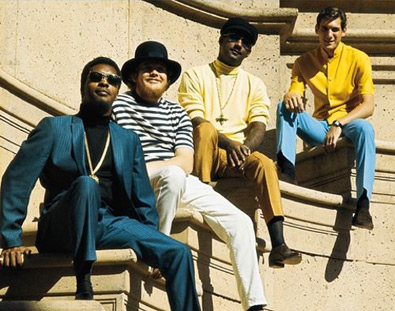
Sly And The Family Stone


PSYCHEDELIC SOUL: 1966-'72
by Tym Stevens

This is a Spotify player. Join up for free here.


*(The Player is limited to the first 200 songs.
Hear the unlimited Playlist here.)


"Now the time has come. There are things to realize."
-The Chambers Brothers


It ain't psychedelic unless it's all the colors. Here's some more of the Psychedelia story, told from some new sides.

Rock'n'Roll is only black and white on the page. In real life, it's a prism. Everybody was part of it, and in all ways. It's simple enough to define Garage rock as R'n'B or Blues riffs with much added fuzz and attitude. Or Psychedelia as the same gone more trippier and expansive. So it should be simple enough to include everyone who was doing that music. In real life, Jimi Hendrix, Sly & The Family Stone, The Isley Brothers, Black Merda, Funkadelic, and Miles Davis have as much to do with the Psychedelic era as their comrades Vanilla Fudge, Jefferson Airplane, Pink Floyd, The Beatles, and Janis Joplin. The books and the box sets won't tell you that, so I am.

The mainstream culture at large in the 60's was for the Included. TV ads/ shows, churches, schools, and industry were very good about reminding everyone what those parameters were, and how you did or didn't fit into them. But in the biggest generation ever, that left a lot of ostracized people to meet each other and bond together. Ban The Bomb activists, Folk protesters, Rock hedonists, Jazz hipsters, ecologists, vegetarians, Civil Rights rebels, student uprisers, international dissidents, disillusioned soldiers, young college women, banned writers, progressive teachers, pacifist clergy, migrant workers, repressed voters, gays, starving artists, fashion forwards, philosophers, poor people...the list was limitless. By sharing common grievance they began to see an end to limitations when they pooled their strengths. That's the real 60's...the Empowerment Era. En masse, their alienation created a sub-nation, a counterculture. It's mantra was freedom, in the sense of stripping away artifice and making art out of personal truth.

Revolt into style; that had been Rock'n'Roll in 1955. But by the mid-60's there were now so many styles it was united mainly by a philosophy: do what thou wilt shall be the whole of the law. For every person who ever felt alienated, put down, pushed out, invisible, freakish, or misunderstood, this was revolutionary. The outlook of inclusion made the world a theatre of the possible.

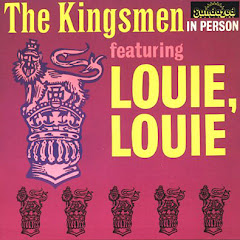
Jimi Hendrix was infinite. He was cubism, looking from all angles for a fuller view. Your one thing was only that. He was past anyone's petty limits like the river, like rainwater, like the wind. His first cover song was Dean Martin, his first concert Elvis, he was there in the Seattle club when The Kingsmen inverted Louie Louie into garage rock, he supported soul acts while soaking up Dylan and the Beatles, Lenny Bruce and Miles, comic books and Bradbury. He watched even bad guitarists to learn from their mistakes. He was a mosaic man, African and Irish and Cherokee, was modernity itself. He was an intersection for the past and the future, for the organic and the electronic, the gypsy and the astronaut, for abrasion and elegance. He was the fulcrum for all things to come.

Jimi always got fired. Three gigs in, the Soul headliner would get shown up by his guitar show-outs and out he went. Greenwich Village and then London gave him wider range to play in. The Chambers Brothers were doing alright singing blues and gospel on the folk circuits, but they had this one crazy electric song that lit up crowds while shorting out record execs. Dylan went electric heretic too and the time had come. Tune up, plug in, rock out.

It's all about interchange and inner change. Culture is an intersection of ideas, constantly meeting and mutating. All input is welcome so don't be put out. Exchange and change with it. "Got To Get You Into My Life" was a response to Stax Records. Jimi donned his first Edwardian coat and afro after Dylan's "Blonde On Blonde". Keith Richards envisioned "Satisfaction" as an Otis Redding song with his guitar subbing for the horns (which Otis returned in kind with his cover version). Sly Stone was a San Fran DJ who actually drove ratings up for his soul broadcast throwing in Lord Buckley skits, The Beatles, and Classical pieces; he produced the hits "Just a Little" and "Laugh Laugh" for The Beau Brummels, and The Great Society's original version of "Somebody To Love". The first band Neil Young was in had Rick James as the singer. Char Vinnedge loved The Beatles, but the more she heard Jimi the more fuzzed out her band The Luv'd Ones got. "Sgt. Pepper" was the moment George Clinton knew his charade of trying to be the Temptations was through forever. Motown itself schismed the day producer Norman Whitfield started churning out psychedelic masterpieces in response to Sly. That's Duane Allman roaring out the mighty licks behind Aretha on "When This Battle Is Over". Billy Preston would become the Fifth Beatle, fueling "Get Back" and "Don't Let Me Down" with his keys; and the Sixth Stone, with "Doo Doo Doo (Heartbreaker)" and "Melody". HAIR, "The American Tribal Love-Rock Musical", destroyed the color line on Broadway, and every taboo about sexuality, nudity, language, dissidence, and musicality with it. Visiting America, Fela was as radicalized by the politics of the counterculture as he was by the beats of James Brown. After the technicolor smorgasbord of the Monterey Pop Festival, reality had become a sampler buffet for everyone to enjoy together.

The Jimi Hendrix Experience


From Monterey '67 through Woodstock '69 that cross-fertilization was like a global hothouse of creativity. It rolled over into the early 70's, but something changed. Popular acts in the mid-60's had all been played side-by-side on AM stations. Then FM allowed college stations a new bandwidth for extended and experimental music. All very expansive and inclusive. But in the wake of Woodstock, the counterculture nation were now seen as a marketing pool. FM radio then re-segregated the audience by specifically dividing Hard Rock away from Heavy Soul through the 70's. Even though Santana, Miles Davis, Sly & The Family Stone, The James Gang, Mandrill, Blood Sweat & Tears, Funkadelic, Chicago, and Billy Cobham were playing variants of funky jazz rock, they were divided on radiowaves by Commercially-enforced, racialized programming. It interrupted the culture by blockading the intersection of ideas. This polarized the audience, helped seperate the movement, and left us with the segregated, Marketing police state of radio today.

Here's my middle finger upside their face. I say that this no longer gets to dictate the narrative of Rock'n'Soul. I say, "Oh bondage, up yours! I'm putting The Rotary Connection back in. And here's Edwin Starr telling warmongers to kiss his ass, and here's peach and maple girls from HAIR singing 'White Boys are so damn yummy and Black Boys are delicious'. Oh I got something for ya, here's Funkadelic rocking 'Funky Dollar Bill' harder than Sabbath. Or when they backed co-writer and singer Ruth Copeland. How about The Bar-Kays' 'Black Rock' LP on Stax? Social commentary? I got Marvin Gaye's 'What's Going On' album and The Last Poets and Curtis Mayfield. Here's Marsha Hunt jamming with Deep Purple with a fro bigger than my loud mouth. Here's Merry Clayton doing her own blast on the 'Gimme Shelter' she dueted with Mick on...oh wait, where are you running to, Radio? Trying to hide behind the CD Archivest? Well, here's crazy-ass stuff from Chubby Checker, Nina Simone, and Betty Harris. Whatcha gonna do now? Now the time has come. There's no place left to run."

Okay, I didn't really say that. But I'm telling you, and between all of us en masse we can get this party started back right. My outlook is inclusion and to me this world is still a theatre of the possible. I'm not alone. We are surrounded by children of the revolution everyday. The Afrodelic pioneers I'm championing are the fathers and mothers of P-Funk, Earth Wind & Fire, Betty Davis, Bob Marley & The Wailers, Bad Brains, Afrika Bambaataa, Was (Not Was), Tom Tom Club, Prince & The Revolution, Terence Trent D'arby, Living Colour, Fishbone, 24/7 Spyz, Public Enemy, De La Soul, The Jungle Brothers, A Tribe Called Quest, Lenny Kravitz, Neneh Cherry, Soul II Soul, Pop's Cool Love, Arrested Development & Dionne Farris, Digable Planets, The Family Stand, Cree Summer, Meshell Ndegeocello, Erykah Badu, Kelis, Joi, Most Def's Black Jack Johnson, Robert Randolph & The Family Band, Galactic, India.Arie, and Nikka Costa. Shoot, I'll run my mouth off on it all day, you think I won't? (Just wait till I scare the hell out of you with my tsunami about Funk music.) Rock'n'Roll is only black and white on the radio. In real life, it's a prism. We might get burned up by the sun, but we had our fun.

It's not Psychedelic unless it's all the colors. Let's kick out the jams, Brothers and Sisters!


PSYCHEDELIC SOUL: 1973-Today
by Tym Stevens

This is a Spotify player. Join up for free here.


*(The Player is limited to the first 200 songs.
Hear the unlimited Playlist here.)


© Tym Stevens


See Also:

DON'T TREAD ON ME: The Original Punk of 1960s Garage Rock, with Music Player!

HERE IN PURPLE VELVET NOW: The Psychedelic Revolution, with 2 Music Players!

BEATLESQUE Songs: 1967-esque, with Music Player!

Sly Stone's "I Want To Take You Higher" And Its Unending Influence!, with Music Player!

BEYOND COOL: Pedro Bell, Funkadelic's visionary!


-The Real History of Rock and Soul!: A Music Player Checklist


Tuesday, March 25, 2008

HERE IN PURPLE VELVET NOW: The Psychedelic Revolution


...with 2 Music Players!


J I M I
H E N D R I X


PSYCHEDELIC: 1966-68
by Tym Stevens
This is a Spotify player. Join up for free here.


*(The Player is limited to the first 200 songs.
Hear the unlimited Playlist here.)


"Here in purple velvet now/ where time and motion slows."
-The Pretty Things, 1968


Roger McGuinn and David Crosby of The Byrds were machine enthusiasts. They likened musical eras to the tech of their times. Jazz would have been a shellback Caddy clacking the tarmac; the first Rock'n'Roll was a '57 Thunderbird revved up and roaring full-flung; and The Beatles were the sound of a jet engine, like a million little girls screaming, louder than God and flying just as brightly. The Fifties had promised the world of tomorrow and its descendent delivered. The Sixties was the Space Age, the Mod years, the beginning of the future. It was curvilinear chrome and sleek cool. It's Ken Adam's James Bond sets, Rudi Gernreich's cutting-edge couture, the Jetson's flying traffic, the hyperstylish credits on TV spy shows. It's the London swing mode of young women skipping the mom route to jetset in Mary Quant trimcuts, Vidal Sassoon asymmetric bobs, and many picking up electric guitars. Or daydreaming to, in small burghs worldwide. Sleek, slick, op, pop, bright, brassy, wow, pow. The New Now.

But time is malleable. Or at least the perception and use of it. After three years jetting the globe pumping out ungodly amounts of classics, The Beatles and their ilk wanted some time out. Not to stop, just to breathe and focus. Speed had kept them moving but grass grounded them. Then lysergic bliss calmed them when they were spiked with acid by a dentist. Wow. Wait a minute. They reflected on everything they had heard and learned in the world. They felt the power that they had given themselves. The music began to change along with their outlooks. Their running mates The Kinks were the first to get Indian influence on record with "See My Friends"; it's lolling waves of droning tone a new tempo to drift, a new course to chart now at your leisure.

"Nothing is real," William S. Burroughs was fond of quoting, "Everything is permitted." It was time to assess the happenings of ten years time. Rock was now the communal language of a new, gigantic generation. It had fueled their mad abandon to destroy all barriers and unleash possibilities. Just as 50's Rock had rejected the consumerist dream while using all of its tools to assault it, so did its heirs. An instinctive movement now groundswelled away from the polished perfect and into the organic, the natural, the rustic, the chaotic, the absurd, the fluid. In rejecting the present's vision of the gleaming solid tomorrow, they revamped the past. English youth went Edwardian, with military jackets and vintage spectacles, olde-world whimsy and dandy eccentricism. The Left Coast of Cali went Wild West, with indigenous tassles and cowboy buckskins, beads and sideburns and bandanas. Jimi Hendrix, an Irish/African/Native American, was so fluid he would do both in each country. He was the new and revised Now incarnate; cosmopolitan, communal, trans-temporal, finding freedom in multiplicity.

Underlying (undermining) all of this was LSD. Leary studied it like a lab trial, Kesey handed it out like communion wafers. Their time-release trip caught hold by '66. Love songs and social barbs became micro/macrocosmic ruminations. By 1967 everything changed completely.


Jimi Hendrix turned Rock'n'Roll into ROCK. Like an Edwardian gypsy Galactus, he had absorbed everything -all the bluesmakers, tours backing every Soul act, the ricochet roar of Surf, the jet engine sunshine of the Fabs, and the surreal slash of Dylan- and he wanted more. He started his arrival in London as a flashy virtuoso, then sculpted feedback and distortion, invented the wah-wah, stacked his Marshalls till ears bled, twisted pop songs into "sheets of noise" like jazzbro John Coltrane, and turned the studio into an instrument flanging sonic masterpieces.

London had the best studios going. Most bands had a shot at one single and that was it. That had been the history of Rock'n'Roll in a nutshell and a bill. But now something new was happening. With so much mindscape to cover, bands crammed an album's worth of ideas into three fuzzblast minutes of plastic, spinning out the greatest psychedia ever set loose. The Yardbirds, Cream, The Pretty Things, The Creation, Donovan, The Brian Auger Trinity with Julie Driscoll, Les Fluer de Lys with Sharon Tandy, Love Sculpture (Dave Edmunds), Traffic (Steve Winwood), The Move (Roy Wood and Jeff Lynne) gleefully embraced dementia. (And unfortunately, souls like Syd Barrett, Sky Saxon, Roky Erickson, Tawl Ross, and Brian Wilson really did.) Their American cohorts- The Chocolate Watchband, The Chambers Brothers, The Doors, The Luv'd Ones (Char Vinnedge), Funkadelic, and the scary Captain Beefheart- raced them to karmageddon. No other generation and no other sound may ever have electrified and alarmed the world as this one.

They wanted a malleable future, a changeable present, an inner revelation, an outer revolution, an infinite plain of possibility they could journey through and learn from...and to create a future generation that transcended everything. No Pain, no divisions, no killing, no selfishness. That utopian generosity has been sorely tested on the tidal rocks of time, by their repressive enemies and the kneejerk callowness of succeeding youth. But their sonic dreams, organic spiritualism, and cultural soul still speak to new generations who long for the same in the latest now.

This music was technicolor brainstorms. This fury is beautiful and forever.

The flesh is not. The fluid they burned for inspiration corroded them. Drugs devolved into a drag. At the end of the glorious arc, highpriest Jimi sang, "Broken glass was all in my brain/ It used to fall out my dreams and cut me in my bed." But he takes us out with a secret smile, saying, "In the meantime, which is a groovy time..."

Make your meantime groovy, baby, right now


PSYCHEDELIC: 1969-'73
by Tym Stevens
This is a Spotify player. Join up for free here.

*(The Player is limited to the first 200 songs.
Hear the unlimited Playlist here.)


Disclaimer: Tym advocates the use of nothing except a focused head and a full heart.


© Tym Stevens


See Also:

DON'T TREAD ON ME: The Original Punk of 1960s Garage Rock

MY SOUL HAS BEEN PSYCHEDELICIZED: The Afro-delic Dimension of Psychedelia, with 2 Music Players!

BEATLESQUE Songs: 1967-esque, with Music Player!

Sly Stone's "I Want To Take You Higher" And Its Unending Influence!, with Music Player!

BEYOND COOL: Pedro Bell, Funkadelic's visionary!

_____________________


"Sing A Simple Song" - Sly Stone > Jimi Hendrix > James Gang > P-Funk > Chili Peppers > Public Enemy


-The Real History of Rock and Soul!: A Music Player Checklist


Saturday, January 5, 2008

JOHN BARRY: The Influence Of The JAMES BOND Sound On Pop Music


How John Barry's
JAMES BOND sound
influences decades of popular music


...with 2 thunderballing
Music Players!


"You only live twice / Or so it seems /
One life for yourself and one for your dreams."

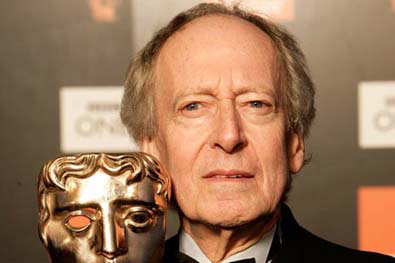
The great film composer JOHN BARRY lives on doubly in the lifetime of great music he gave us and in the galaxy of artists who have homaged him for seven decades.

Here's two Music Players and essays to prize his sound and sing his praises.

Music Player Quick Links:
𝟭 JOHN BARRY: a musical career overview
𝟮 JOHN BARRY's Rock Disciples and the James Bond sound

Each Music Player is in chronological order, from the '50s to the present.


1
The music of
John Barry


JOHN BARRY
by Tym Stevens

This is a Spotify player. Join up for free here.

Spotify Playlist link


"BARRY. JOHN BARRY."


John Barry was the Man.

In the early-'60s he usurped Henry Mancini's mantle as the hip film composer of choice. Mancini had straddled an odd space between soothing sounds and hipster lounge culture. He could knock out the eerie lullaby of "Charade" or "The Days of Wine and Roses" for the straights, and crank out the tipsy joy of "Baby Elephant Walk" and the sly jazz of "The Pink Panther" for the fingerpoppers. But it was his score for the 1959 TV detective series, "Peter Gunn", that clued him to the youth. With its jazzy nocturnal strolls through the hardboiled cool of wet streets and nightclubs it gripped them by the scruff and the hips. It may even have undone him. A stringslinger named Duane Eddy, "the Twang Bar King", covered its theme as a Rock'n'Roll instrumental, surpassing the original so much that most folks think it is the original. It also became the prototype for Henry's emerging challenger.

John Barry was trying to make it in London as a bandleader of a combo that belted out Rockabilly, Swing Jazz and light Pop for dancehalls. He conducted by trumpet like jazzers but had an eye for the emerging phenomenon of Rock. As an arranger he could absorb the styles of the day and craft canny showpieces for his John Barry Seven. There's even a live album with teen girls squeeling at every brass blast-off. But there is already a sense that Pop was too limiting for him, that he had something grander to say and needed a new canvas to express it. The first indication came with a track called "Bees Knees", as the Seven's signature macho brass fanfares click with a hard clanging guitar lead. Soon, John discovered a guitarist named Vic Flick, whose ringing reverb crystallized the heart of where he was heading.

Their vehicle was the theme song for the 1960 British film, BEAT GIRL. This overlooked gem is the moment he became the Man. With Vic's terse tremolo, the jazz drums, and the striding tides of brass, it distills his future in a minute-and-forty-one seconds. Perfect. He continued to refine this sound on subsequent instrumentals, counterpointing Vic with pizzicato strings and trumpet codas.

And then the big break came. He was asked to supplement Monte Norman's calypso score for the first film based on a popular spy novel series. John created "The James Bond Theme" for the opening credits. Vic's guitar, straight out of the pioneering Rock of Duane Eddy and Surf king Dick Dale>, hit the screen and the audience like a full clip. It defined the flinty cool of Bond instantly, and assured Barry's ascension into the film pantheon. Though an obvious extension of his work on BEAT GIRL, to his chagrin the tune was eternally credited to Monte Norman(!). John had his restitution when he was selected to score the entirety of all the Bond films to follow. His sound proved more defining to the character than even the actors who would portray him. At last he had the outsized, sophisticated canvas he needed.

Jane Birken and John Barry


Until that time, film scores had been descendants of Classical music; big orchestras that underscored every moment of film with swelling eddies of sound. This began to change in the '50s with the increasingly experimental textures of Bernard Herrmann (Hitchcock's VERTIGO) and the pop savvy of Mancini. Barry synthesized these advances and intensified them. His was a world of strong, immediately memorable melodies reiterated as tonal themes, honed by his Pop days. He played with dynamics of silences, murmurings, and crescendos. There was an unapologetic boldness to his arrangements that was loud, sometimes abrasive, and triumphant. Very Rock'n'Roll, very Space Age, very erotic, very modern. He trysted dark cellos with crashing brass, merging Classical and Jazz into an edgy, elegant majesty, like "Bolero" meets "Harlem Nocturne". As locales changed in each Bond film he gleefully absorbed world musics into his arrangements. Here Koto strings, there Ragtime piano. Here delicate elegies, there screaming Clavioline organ. With the tensions of his sounds he captured the contemporary ambivalence about sensuality and violence, compassion and passion's folly. Mister Kiss Kiss Bang Bang.

John Barry's grip on the pulse of the times made him the Man. If he was the hero of the era, then Ennio Morricone was the anti-hero, the deconstruction worker inverting and subverting it all. But John had grip. He expanded into many sounds over many films while always maintaining his melodic and dark lustrous sensibility. In the latter end of his career, he made albums for himself of contemplative beauty or trinkling bebop, like someone who has done it so well he disn't have to prove anything to anyone but himself.


2
The Massive Influence Of
JOHN BARRY


JOHN BARRY: James Bond Disciples
by Tym Stevens


This is a Spotify player. Join up for free here.

*(This Player is limited to the first 200 songs.
Hear the unlimited Playlist here.)


This Music Player contains seven decades of music influenced by John Barry, including:

Henry ManciniCount BasieThe Ventures
Perez PradoKim WestonThe Beatles
Jimmy SmithEddie HarrisEric Dolphy
Ennio MorriconeJohnny CashEdwin Starr

Johnny RiversLalo SchifrinJulie Driscoll
Desmond DekkerRay BarrettoDavie Allan
The MiraclesDusty SpringfieldPink Floyd
The ByrdsThe Bar-KaysIsaac Hayes

Paul McCartneyAlice CooperShocking Blue
Carly SimonMonty PythonABBAAtlantics
The B-52'sThe SelectorThe Specials
DevoThe Go-Go'sBlondieGoblin

New OrderThe CureStray Cats
Tina TurnerChris IsaakThe Damned
Flaming LipsDepeche ModeThe Delmonas
XTCSinead O'ConnorGBVLyres

Gladys KnightJohn ZornFaith No More
Barry AdamsonPortisheadPulpU2
Magnetic FieldsHooverphonicMono
David HolmesFatboy SlimThe Prodigy

SupergrassApril MarchMobyBjork
GarbageMassive AttackPublic Enemy
Green DayGoldfrappOasisBeta Band
ColdplayMichael GiacchinoChris Joss

Nine Inch NailsDengue FeverMuse
Chris CornellAdeleSiouxsie
Janelle MonaeJack WhiteAlicia Keys
The Last Shadow PuppetsNitzer Ebb

Cee-Lo GreenAnna Calvithenewno2
The KillsSharon JonesMark Lanegan
Lana Del ReyStereo TotalThe Limananas
Adrian YoungeBill FrisellIggy Pop

Chrysta BellKandleBillie Eilish

and many, many more!
Plus Movie and TV Theme Songs!


On His Majesty's Secret Service


What does all this have to do with Rock, you ask? A great deal and much more.

Barry created a new kind of jet-age torch song for the Mod generation, which became hit pop songs. These bold songs required bold singers. Shirley Bassey set the standard for all to follow with a fearless blast on 1964's GOLDFINGER which easily matched his horn bombast. Tom Jones reportedly went so far for glory on THUNDERBALL that he nearly passed out holding that last triumphant note! But Barry could blow cool as well as hot, such as the serene calm Nancy Sinatra brought to the immortal YOU ONLY LIVE TWICE (1968). His declarative brass, slinky ballads, and aching melodies haunt everyone in his wake, beyond time or genre.

His dynamic crescendos especially set the standard for his rivals and successors. This defiantly over-the-top blast invigorated great scores and Rock songs. The breathless bravado of THE BIG GUNDOWN by rival Ennio Morricone owes as much to Barry as it does to Elmer Bernstein's galloping western scores, with singer Christy sounding like she's sprinting across the desert with a message burning her tongue. Paul McCartney brought real Rock swagger and some Reggae saunter into LIVE AND LET DIE (1972); the underrated score was actually by George Martin, but their inspiration was Barry's template. Chris Cornell, Public Enemy, Jack White, Alice Cooper, all have rocked out on the momentum of his piledriving cues.

The generation that grew up on these films and pop hits reflected it in the decades to come. John Barry's dynamic sound has seeded through Rock anthems, Pop ballads, HipHop samples, and TripHop headscapes. The attached music player above tours all of that by comparing John's songs to the songs that were inspired by him (and a few songs that inspired him first). Here's a checklist of the party guests...


ACTION!

Barry created the sound of action cinema for the entire decade.

The spy craze of the mid-'60s set off by Bond canonized Barry's sounds in countless theme songs. Movies like the MATT HELM and FLINT series, MODESTY BLAISE, FATHOM, and endless imitations worldwide. And TV shows like "The Avengers", "The Saint", "The Man and Girl From U.N.C.L.E.", "I Spy", "Danger Man (a.k.a., Secret Agent)", "The Prisoner", "Mission: Impossible", "Jonny Quest", "Lancelot Link", and "Get Smart". Even the modern descendants of these, such as "Alias", "The Venture Brothers", "Nikita", "Agents Of S.H.I.E.L.D.", "Archer", and "Killing Eve", retain the echoes of his touch.


SURF

The Surf guitar sound, paved by The Ventures, Duane Eddy, and Dick Dale, had inspired the hard guitar clang of the Bond theme. And in its wake, the Bond theme inspired an entire sub-genre of spy theme surf songs that continues to this day: you can hear in it The B-52s, Man Or Astro Man?, Laika And The Cosmonauts, The Mermen, and The Aqua Velvets.


GOLDEN GIRL

James Bond was so influential on mass culture that the spy sound pervaded general Pop. The brassy power of Barry and Bassey is especially intense in British Soul sirens, in songs like "The Silencers" by Patti Seymour, "Untrue, Unfaithful (That Was You)" by Nita Rossi, "I've Been Wrong Before" by Cilla Black, and "I Know You Love Me Not" by Julie Driscoll.


SOUL

James Bondage also shimmied through Soul music, with such hits as "Agent Double-O-Soul" by Edwin Starr, "Sock It To 'Em, J.B." by Rex Garvin, and namechecks in Shorty Long's "Function At the Junction".


THE BEATLES

The smash succcess of the Bond films transformed the British image into hyper-cool modernity overnight, and set the avalanche in motion for the British Invasion soon after. Because of this, there is a consistent connection between James Bond and The Beatles over the years.

In GOLDFINGER (1964), Sean Connery makes a flip joke insulting them.

An action sequence in The Beatles' HELP (1965) is underscored by a short orchestral burst imitating the Bond theme.

When John Barry was too busy to score LIVE AND LET DIE (1972), the baton was picked up by Beatles producer George Martin who enlisted Paul McCartney for the theme. To his chagrin, the clueless film producers treated it like a demo and started casting about for a standard balladeer to sing it. Martin politely put his foot down. Paul's Oscar -nominated theme is one of the best-loved and most covered Bond themes ever.

Barbara Bach reached international fame in THE SPY WHO LOVED ME (1977) and then married Ringo Starr. Carly Simon's sultry theme "Nobody Does It Better" for this film is firmly in the tradition of McCartney ballads like "My Love".

"You Only Live Twice" was covered by an '80s Mod calling herself Eleanor Rigby.

Showing there's no hard feelings, Sean Connery ended up narrating a version of "In My Life" on George Martin's retirement album.

In QUANTUM OF SOLACE (2008) Bond meets a ginger agent who insists on being called Miss Fields; it's only on the end credits that we learn her first name is Strawberry.


HE LOVES ONLY GOLD

McCartney's theme was nominated for an Oscar and sold like crazy. The producers moved in the direction of dollars by enlisting the hottest artists of any given moment, like Sheena Easton, Rita Coolidge, Duran Duran, A-Ha, Madonna, Adele, and Sam Smith.

There are special stand-outs along the way. The Pretenders delivered two sadly unsung classics for THE LIVING DAYLIGHTS (1987) with "Where Has Everybody Gone" and "If There Was A Man". LICENSE TO KILL (1989) has an equally unheralded and soulful performance by Gladys Knight. Garbage was so into recreating Barry's signature sound that they made a brilliant spy video to accompany THE WORLD IS NOT ENOUGH (1999). Chris Cornell channels Bassey and Tom Jones in CASINO ROYALE (2006) with his "You Know My Name". Jack White and Alicia Keyes roar through "Another Way To Die" for QUANTUM OF SOLACE (2008). Adele invoked the ghost of Goldfinger in her majestic title song for SKYFALL (2012). Sam Smith followed suit with the soulful "Writing's On The Wall" for SPECTRE (2015). Billie Eilish crooned the title song for NO TIME TO DIE (2021).


MOONFINGER

Moon River ➤ Goldfinger ➤ Moonraker ➤ Goldeneye ➤ Goldmember

There's a funny pretzel loop involving the theme for GOLDFINGER (1964), immortalized by Shirley Bassey. At the time it was so noted for its sonic resemblance to Henry Mancini's "Moon River" that it was often called "Moonfinger". Later, John Barry scored the Bond film MOONRAKER (1979), which was perversely sung by Shirley Bassey. Bono and The Edge were clearly homaging "Goldfinger" in writing the theme for GOLDENEYE (1995), sung by Tina Turner in her best Bassey belt-out. Eventually the telephone game loses its mind. Though Austin Powers goes up against GOLDMEMBER (2002), the movie actually homages 70's action films; so Beyonce's theme completely loses the plot by combining two songs by KC And The Sunshine Band!


KISS BANG

When Bondmania hit, an Italian journalist nicknamed the lascivious spy 'Mr. Kiss Kiss Bang Bang'. Barry liked this phrase enough to create a song for THUNDERBALL (1965). It was meant for Shirley Bassey but then went to Dionne Warwick. The brass worried about a song lacking the film title, the Tom Jones theme was used instead, and Dionne's recording was released 30 years later. An Italian spy knock-off, "BACIA E SPARA" (1966) was renamed "Mr. Kiss Kiss Bang Bang" in American release, with a score by the great Bruno Nicolai. 'Kiss Kiss Bang Bang' has been used to name two comedies since, including the terrific noir spoof KISS KISS BANG BANG with Robert Downey Jr (2005). (When the director of that film reunited with Downey helming IRON MAN 3 (2013), the end credits were a direct homage to Maurice Binder's credits for Bond films.) It has also been the name of original songs by Nitzer Ebb, Specimen, The Celibate Rifles, and Cinerama. And a collection of film essays by Pauline Kael because it is "perhaps the briefest statement imaginable of the basic appeal of movies."


DR. NOPE

Many artists pitched great songs for Bond films that got rejected.

These were alternate original songs that are just as cool for their own sake; Johnny Cash's "THUNDERBALL", Alice Cooper's "THE MAN WITH THE GOLDEN GUN", Blondie's "FOR YOU EYES ONLY", Scott Walker's "Only Yourself To Blame" for THE WORLD IS NOT ENOUGH, and a raft of TOMORROW NEVER DIES original songs by Pulp, Saint Etienne, Marc Almond, The Cardigans, and Swan Lee.

And oftimes an artist makes a song in the vein of the Bond/ Barry sound just for their own pleasure. New Order's "Blue Monday" (1983) owes as much to Vic Flick's treble as to Duane Eddy. A particular unknown delight is Lori And The Chameleons' "The Lonely Spy" (1981). Artists continue to croon sultry ballads with dangerous mood, such as Serena Ryder, Lana Del Rey, Caro Emerald, Groovy Uncle, and especially Kandle.


COVER ME!

And then there's always a great cover version.

Just marvel at the terrific cover of "Goldfinger" by postpunk pioneers Magazine! "You Only Live Twice" has been done by Marc Almond, Coldplay, and Bjork, and sampled by Robbie Williams and Cee-Lo Green. John Barry was lucky to have his hero Louis Armstrong perform "We Have All the Time In the World" for ON HER MAJESTY'S SECRET SERVICE before his passing; this song has been covered by My Bloody Valentine, Fun Lovin' Criminals, and even a tender take by Iggy Pop. Arctic Monkeys and Kanye West have tried on "Diamonds Are Forever". The first cover of "Live and Let Die" was actually on its own soundtrack, with a Funky Soul version by B.J. Arnau; we see her performing it in a New Orleans bar in the film. Linda McCartney had suggested a Reggae middle section, which triggered a Reggae cover by Byron Lee And The Dragoniares, who had done Calypso songs for the first Bond film, DR. NO (1962). And it became the signature song of Guns'n'Roses. In Radiohead's cover of "Nobody Does It Better" they pronounced it the sexiest song ever written.


YOU ONLY LIVE TWICE

And then there's cloning.

Though Barry hasn't done the Bond music for decades, his hand-picked successor David Arnold has done near-flawless homages in recent years. Likewise, pastiches of Barry run through AUSTIN POWERS, brilliantly in Michael Giacchino's score for THE INCREDIBLES (2004) and THE INCREDIBLES 2 (2018), and David Holmes' score for HAYWIRE (2011).


NEVER SAY DIE

And then there's sampling.

Barry's riffs and moods have been sampled by Moby, Public Enemy, House Of Pain, and The Prodigy. Propellerheads took their whole Big Beat easthetic from Barry, even enlisting Shirley Bassey for their dance hit "History Repeating" (1998), as well as remixing an amped ON HER MAJESTY'S SECRET SERVICE. This earned them the clout to throwdown in the score for TOMORROW NEVER DIES (1997). Fatboy Slim took the key guitar riff of John's breakthrough "Beat Girl" as an essential part of his breakthrough, "The Rockefeller Skank". (♫ "Right about now, the Funk Soul Brother, check it out now..!" ♫)


Portishead, "To Kill A Dead Man"


DANCE INTO THE FIRE

And then there's TripHop.

In the '90s, Barry's atmospheric darkness and propulsive rhythms influenced a new wave of edgy dance music with cinematic arrangements. Many acts lopped under the TripHop umbrella took inspiration from film composers like Barry, Lalo Shifrin, Roy Budd, Angelo Badalamenti, and Ennio Morricone.

Portishead made their breakthrough with a longform video called "To Kill a Dead Man", which combined the style of Bond films with the anti-Bond grit of Michael Caine's 'Harry Palmer' spy series. Their sound sampled from the dark shadows of Barry and Shifren. Likewise, Mono's big hit "Life In Mono" uses the creepy harpsichord of Barry's THE IPCRESS FILE as its hook. Similarly, Goldfrapp, Barry Adamson, Tricky, Sneaker Pimps, Hooverphonic, David Holmes, Blue States, and Massive Attack have haunting refrains of Barry in their cinematic dance themes.
Triphop continued to flourish across time, such as the Bond-esque moodiness of Kandle, and Unloved's drmatic songs for the TV series 'Killing Eve' (2018).


EPILOGUE

And then there's the real thing. When Jarvis Cocker of Pulp curated the 2007 Meltdown Festival, he had a philharmonic night celebrating Barry, with both of them performing together. A proper tribute to a proper artist.


This sadly is the end of our hero, who passed away in 2011, but John Barry will return in another artist and composer dear to your heart. Until then, "Live one life for yourself/ And one for your dreams."


© Tym Stevens


See Also:

THE PRISONER: Its Influence On Music, TV, and Comics, with Music Player

JIM STERANKO, Agent of S.T.Y.L.E.! - His Inspirations and His Influence

TWIN PEAKS: It's Influence On 25 Years of Popular Culture, with 5 Music Players

How SPAGHETTI WESTERNS Revolutionized Rock Music! , with 3 Music Players

How STAR WARS Is Changing Everything!

_____________________


John Barry > Fatboy Slim

20 Most Badass JAMES BOND Women!


_____________________


THE CANON 1: 50 Books That Created Modern Culture, with Music Player

THE CANON 2: 50 More Books That Created Modern Pop Culture, with Music Player

THE CANON 3: 50 Recent Books That Created Modern Culture, with Music Player


Friday, November 30, 2007

DON'T TREAD ON ME: The Original Punk of 1960s Garage Rock

...with 2 Music Players!


The Roots of GARAGE ROCK


"I heard Papa tell Mama, 'Let that boy boogie woogie/ Coz it's in him, and it's got to come out'!"-John Lee Hooker

Robert Johnson had paved the crossroads for the Blues, between the sacred and the profane; his acolytes hit another intersection, between the acoustic rural past and the electric urban future. After the great exodus from the depleted Southern states to the promise of Chicago, Detroit, and other Rust Belt cities, African Americans faced new paths of possibility or peril (as did their Dustbowl Days peers who went to Golden California). Muddy Waters was the first Blues maestro to go all electric in 1948, arguably creating the first Rock'n'Roll band. On his heels were Howlin' Wolf and John Lee Hooker. It was a tougher, terser metallic blues, coarsened and amplified by the city. And by a divided soul in play. Compare the liberation-in-dance lyric above with Hooker's murderous vibe in his "Mad Man Blues", over jarring chords played like a stabbing: "I'm gonna take you down by the riverside/ Hang you a knot, baby, by your neck/ I got the madman blues". John uses the metaphor of a betrayed love to vent his fury at the racist structure he is struggling in. It's this crossroads that is at the heart of Rock; between ecstasy and agony, between celebration and revolt, between the hereafter and heresy.

American youth, like all, revelled in their frills while questioning their worth. When was a sleek car just a slick scam, when was a dusty old tune actually a raw truth? 50's Rock'n'Roll threaded this maze with every dance step. To the public at large this dance rebellion just looked like juvenile delinquency. But the harder they clamped down, the more kids wanted to be James and Marlon, Jayne and Bettie, a Jet or a Shark...wanted to rumble.

Into England rode the Teddy Boys. The working class were just a coiled calm. They thirsted for the driven, the free, the real. American musics were dispatches from the landscape of the possible. Tough youths sculpted brillo coifs, rode cycles, and donned Edwardian longcoats (hence "Teds"). These Rockers wanted the brutal, the intense, the unvarnished. Meanwhile other youth wanted the New now. They wanted to kill mundanity with modernity. The Mods wore the sharpest newest threads, rode million-mirrored Vespas, and wiggled to Soul music in clubs. Caught in the median were the Beat bands, who retired their suits by '65 under Mod influence while reclaiming more and more of the hard bristle of 50's Rock. (Asked if he's a Mod or a Rocker in A HARD DAY'S NIGHT, Ringo replies, "I'm a mocker.")

This schizoid temperament in Rock -between rough past and sleek future, the raw and the refined- was now international. From this would emerge a new hybrid trend that would effect the music's future forever.


GARAGE ROCK 1965-1966


In America, frat bands like The WAILERS had taken Little Richard's ferocity, welded it to Link Wray's rumble, and terrorized Seattle dance halls. Their rivals The KINGSMEN were the first out the gate to record "Louie Louie". They'd sped up the Jamaican ode and slurred the words to disguise they didn't know them. It was a cheeky triumph of attitide over aptitude, and blueprinted the music later called "Garage" or "punk music" (by the time Lenny Kaye compiled the seminal NUGGETS album in 1972). Harder than anyone were The SONICS, whose barbed guitar and vocals could strip paint. (Their 45 of "Have Love, Will Travel" later played continuously on the jukebox in the SEX shop as McClaren and Westwood were midwiving the Sex Pistols.) Not to be outdone, UK acts like The ROLLING STONES, The ANIMALS, The KINKS, and The YARDBIRDS ramped up the clang and swagger in their blues. After the British Invasion returned America's music back to it supersonic, an estimated 63% of young US males were in budding bands in their garage, barn, or dorm room. (And many uncounted females, as well and as usual.) The sound was amateur, rough, and wild. Curt guitar, pounding rhythm, farfisa organ shrills, and the voice usually shouting, sneering, or jive drawling discontent with dumb love.

American garage rock was full throttle with no highway. It was happening off most of the record industry's radar, on nowhere labels and lost 45's, and the wilderness of hole-in-the walls with PA's. Maybe it didn't get killed because they didn't see it coming. Crazed Texans like The SEEDS and The 13th FLOOR ELEVATORS; The MUSIC MACHINE, dressed all in black and shades with one glove; The MONKS, former soldiers with monk haircuts frothing apocalypse; DAVIE ALLAN & The ARROWS throwing fuzzed-out biker anthems like molotov cocktails; DEAN CARTER, splicing Rockabilly and Garage in his carpet-walled living room studio; and Char Vinnedge leading her all-female LUV'D ONES on a assault that got darker and more abrasive as it went. These people acted like there was no tomorrow but they had to get there yesterday.

The Pleasure Seekers.


But then, DYLAN. His forefather Woody Guthrie had scrawled "This machine kills fascists" on his battered guitar; likewise, Dylan emerged from the early 60's Folk boom as a tonic to vacuous industry Pop. But The Beatles had now reignited his secret love of Rock. Seeing the British retool US roots music, he went electric with the aptly-titled BRINGING IT ALL BACK HOME. Too damn mercurial to remain the Protest King, Bob went intensely surrealistic, spitfiring cryptic barbs like Kerouac with the madman blues. Garage bands couldn't match the wordplay but they sure got the attitude. Their immature tirades against girlfriends shifted gears into social discontent. "I know of nothing else that buggggs me," seethed Australia's The EASYBEATS, "more than working for the rich man." From New Zealand came The BLUESTARS with "I've gained a label as an angry young man/ because I don't fit into the Master Plan." KIT & The OUTLAWS snarled "People walkin' round on me and they stomp my name in the ground/ Don't tread on me! Coz I wanna be free!"

The tension kept intensifying. Before rec execs could spit their martini, rock'n'roll was turning into rawwwwk. The WHO declared their generation with technology while tearing it to shreds. Fuzz chords corroded factory-fresh studio speakers. Brutal rhythms dropkicked amps like Bo Diddleysaurus Wrex. Weird echo and flange distorted state-of-the-art mixes. Madmen now menaced the airwaves from hot wax as fellow freaks around the world responded in kind. The DOORS, BLUE CHEER, CREAM, The CREATION, The YARDBIRDS with Jimmie Page. And then a student of Seattle and the South named JIMI HENDRIX landed in London. With him he brought the whole raw history of the blues and a futuristic clang louder than gods. He is the axis, bold as love, the crossroads from Garage into all Hard Rock, Heavy Metal, Punk, Grunge, and Garage Revival to come.

"Your sons and your daughters are beyond your command/ It'll soon shake your windows and rattle your walls..." -Dylan


© Tym Stevens


See also:

1950s PUNK: Sex, Thugs, and Rock'n'Roll!

The Legacy of LOUIE LOUIE, with Music Player!

The Pedigree of PETER GUNN, with Music Player!

BEATLESQUE Songs: 1966-esque, with Music Player!

HERE IN PURPLE VELVET NOW: The Psychedelic Revolution, with 2 Music Players!

WOMEN OF ROCK: The 1960s, with 2 Music Players!

ROCK Sex: Rock Revolution = Busted Amp! - Ike Turner > Burnette Trio > The Kinks > The Beatles


_____________________


"Evil Hearted You" - The Yardbirds > Pixies

"I CAN'T EXPLAIN" - The Who > David Bowie > The Clash > Fatboy Slim > The Hives

The Kinks > Sex Pistols > The Kinks


The Real History of Rock and Soul!: A Music Player Checklist


Friday, October 19, 2007

THE BRITISH INVASION!

...with Music Player!


I Put a Spell On You


The British saved Rock'n'Roll.

The usual rap goes that there is a gap between the implosion of the first Rock'n'Roll stars (1959) and the phoenix nova of The Beatles (1963). In this pop wasteland, prefab pretties like Fabian and Annette pantomimed and pretended. The truth is better. This is actually an intensely fertile time of expansion in the wake of that first Big Bang of Rock. It'd be unfair and unaware to overlook this early 60's hotbed: the adolescent opera of the Girl Groups; the Motown machine revving up; the grand epics of Phil Spector; the turbo fun of Brian Wilson's bunch; the kick-azz grit of the Chess Records mob; and the ascent of Soul music under the wings of Ray Charles and Sam Cooke. But of these, it was Surf music that most retained the bristling edge of Rock. With its full-throttle fearlessness, it preached the virtues of speed, clamor, and sleek power. All of these new influences enthralled european teens, but it was that guitar that spurred them into magnificent action.

First up, there was the british Rockabilly star, Tommy Steele ("Doomsday Rock"), then leather-god Vince Taylor (the original "Brand New Cadillac", covered by the Clash), and Johnny Kidd & The Pirates ("Shakin' All Over"). Then brilliant producers like the eccentric genius Joe Meek came in with his guitarstrumental bands. Meek, a secretly unhinged dandy, was a tech wizard who concocted weird sound instruments in his apartment studio and recruited acts to justify their use on pop records. His oeuvre straddles prom rock shuffles, Les Paul's outlandish Jazz scales, the bubbly pizzicato pop favored on government sanctioned radio, and an obsessive penchant for otherworldly tones. Plus, he idolized Buddy Holly and the hard echo of Duane Eddy and Dick Dale. All of this hit a beautiful equinox with The Tornados' "Telstar" (1962). Its eerie interstellar metallic vibrato shocked radio listeners like an Orson Welles broadcast and ushered the guitar wave of The Tornados and The Shadows and art school rockers everywhere.

Art school was the only bastion for the rebel in such a rigidly classist society. England was now a working class nation tyrannized by a mass delusion of elitist civility that was crushing its earthy heart. The War had destroyed them, the 50's was all about picking up the pieces. While parents clung to status quo for stability, their children wanted something more. Rock'n'Roll was like a reverse blitzkrieg. It was a wave of concussive renewal and creation. They were riveted by the foreign-ness of it, but also by the familiarity of it. In the raucous roll of Chuck Berry, Little Richard, and Bo Diddley they could hear the robust tavern ballads of warrior pasts. In the ethereal country hymns of the Everlys they could hear celtic madrigals. In the plaintive strains of Hank Williams, Buck Owens, and Patsy Cline there was the Olde Country folk of troubadours, brought home more closely by the emerging Bob Dylan. In the coiled cool of Howlin' Wolf and Muddy Waters they heard the course rounds of feudal farmers. In orchestral pop soared the strings of their Classical heritage. In the immigrant shangri-la of America they saw amplified and unleashed versions of themselves, risen shining and sleek for the future in the wake of the war. And the ticket to freedom was three chords and a hook!


John Lennon wasn't the only art school drop-out to take up a guitar, but he formed the band to beat all bands. The Beatles were the Biggest Bang, from which everything else would unfold from then on. This is a Law of Physics at this point, so we'll get on to the initial effects. The first was the galvanation of this galling nation of sharp-dressed men with impossibly long hair setting prim young girls on fire with jet-engine hysteria. The second was synthesizing everything from before into a new world of possibilities. The third was to give permission to everyone to be whatever they wanted.

The bands started as retro-revivalists turned into pop futurists turned beat ambassadors. Soon every group in the British Invasion splintered into smorgasbord shards. The blues purists birthed John Mayall's Bluesbreakers, The Rolling Stones, The Animals, and The Yardbirds. The pop pundits cheered Gerry & The Pacemakers, the all-female Liverbirds, The Searchers, and The Kinks. The R'n'B contingent numbered The Who, The Pretty Things, The Spencer Davis Group (with Steve Winwood), Dusty Springfield, Chris Farlow, and Georgie Fame. Donovan ushered in the Folk rebound.

Then quickly, the triumph over America prompted a domino escalation that opened a new door every day with every record over the next several years. Beat groups like The Who and acolytes like Les Fluer de Lys and The Creation started getting more aggro, pumping out a fuzzy delirium later dubbed Freakbeat. With The Yardbirds getting more sonically intense, this ricocheted in rehearsals all over America in the first Garage Rock bands. The Beatles were now exploring all the sounds they'd heard on world tours. A crosscontinental one-upship ensued between the Fabs, Dylan, Brian, the Byrds, and anyone in the wake. This produced an exponential wave of some of the greatest songs and albums ever made. Every style, every madcap instrument, every incredible new studio technique became fair game. As the newly revitalized Rock went both toward the brutal and the beautiful, it began converting the planet.

Rock'n'Roll was here to stay, it could never die. It now belonged to the world.


© Tym Stevens


See Also:

BEATLESQUE Songs: 1963-esque, with Music Player!

DON'T TREAD ON ME: The Original Punk of 1960s Garage Rock, with Music Player!

HERE IN PURPLE VELVET NOW: The Psychedelic Revolution, with 2 Music Players!

_____________________


LADIES FIRST: "I Can't Let Go" - Evie Sands > The Hollies

LADIES FIRST: "Can't You Hear My Heartbeat?" - Goldie And The Gingerbreads > Herman's Hermits

LADIES FIRST: "Needles and Pins" - Jackie DeShannon > The Searchers

"She's Not There" - Bessie Smith + The Zombies = Malcolm McLaren

"Don't Let the Sun Catch You Crying" - Ray Charles > Gerry And The Pacemakers


The Real History of Rock and Soul!: A Music Player Checklist


Monday, October 1, 2007

SHAKE AND FINGER POP! Soul Music and the Interior Truth

...with Music Player!

Booker T And The MGs

_________________


Soul music is the shared emotion of experience. As such, everyone breathing can relate to it, be touched by it, be moved by it. Soul, like all great traditions, is actually what each person has brought to it and what we shared from it.

No one has a monopoly on pain. And the human heart is too huge to be bound by fake distinctions like class, body type, or skin. We breathe the same air, dream the same hopes, feel the same emotions. As souls, we share this life, and when we forget our commonality, music brings us back to the root; the interior truth of self.

From the beginning soul stew was cooked by everyone. It's initial gumbo ingredients were the sacrilegious mix of Gospel and Blues, but Jazz brass horns, voodoo mythos, Country tearjerkers, European strings, modern pop, Rock swagger, political Folk, and even spy themes have flavored it over time. It was male and female, and included label owners, talent scouts, songwriters, producers, and performers from every possible human persuasion.

Case in point. Until the late 1940's, all music made by African Americans was called "Race Music". Jerry Wexler, a writer for Billboard magazine's music sales charts, found this disgraceful. There had to be a more dignified term, but how do you encompass the various musics being made? Since urban Jump Jive and rural acoustic Blues were the most popular, he split the difference with the umbrella term, Rhythm & Blues. While R&B later became yet another flat euphemism for 'black music', it actually spoke to divergent sounds. As 1950 dawned, small independent record labels sprung up everywhere to sample the smorgasbord of homegrown talent nationwide. Jerry Wexler became perhaps the preeminent Soul music producer of all time working for Atlantic Records, owned by the astute and hyper-hip Ertegun brothers from Turkey: Ruth Brown, Ray Charles, the Coasters, Aretha Franklin, Otis Redding, the Rascals, and may more were his charges. Similarly, the Chess brothers parlayed the Chess label, the home of Muddy Waters, Howlin' Wolf, Chuck Berry, Bo Diddley, Etta James, etc. The jewish family had slept with a horse in their house back in Poland to keep warm in the winter. As hardluck musicians migrated from the depleted southern states to their Chicago studios, they found kindred sympathy.

In the South, Gospel music was God's music, and Blues was the Devil's by default. The line between the sacred and the profane was absolute. But the 50's was when the imaginary barriers started being challenged. Ray Charles, a cocksure upstart, committed heresy by combining the two. In 1955 he turned a hymn about love for Jesus into a secular ode to a girl with "This Little Girl of Mine". Churchfolk burned like brimstone over it, but young people felt the relief of constrictions evaporating. Ray had combined the sacred and profane and arrived closer to real life. He showed that any segregation is stillborn while synthesis is always rebirth. All too quickly, radio segregated everyone's psyches using separatist terms like 'Rock'n'Roll' for whites and 'Rhythm & Blues' for blacks. Most often this music was the same thing, just separated by the superficial. But at dancehalls all kids shook their hips the same, yelled the same, felt it the same. It made you move and it said something you understood inside.

Sam Cooke, Aretha Franklin, Johnny Taylor, the Womacks, and scores more also left the amen corner to sing new hymns from their hearts about the way they lived, and how they felt. By the early 60's, the R&B tag waned along with the doowoppers and the jivin'wailers. It was a new ere, with the Civil rights movement come to redeem America's heart and open up its future. It was the era of Soul music.

Robert White and Joe Messina of the Motown house band,
the Funk Brothers.

It came from everywhere and back. Motown records in metal Detroit. Chess in hogkiller Chicago. Atlantic in nosebleed New York. Stax in funky Memphis. And from one-hit and no-hit wonders on meteoric labels throughout the south and west and north, and soon from as far east as the United Kingdom. It was tender or tortured ballads, uptempo dance stompers, crazed gobbledygook, strutting proud testimonials, and anthems for justice. It consoled your pain, conjured your joy. Berry Gordy called his label "The Sound of Young America" to transcend useless terms like black and white, but that was only the beginning. Soul music had tapped into the declarative, confessional nature at the heart of all the world's folk musics. Its passionate vocals were a shared memory in all cultures. As such, it was felt, resung, and rebounded back. It was a universal chord that resonates through all pop history since. The British Invasion couldn't win without it, and its influence fused with Jazz, metronomed beneath Psychedelia, got all Funked up, hothoused Ska and Reggae, boogied Glam, strobed Disco, swelled under New Wave, spliced Rap, throbbed in the abstract through House and Jungle, inverted itself as Neo-Soul...well, you feel me.

Every great label had a house band cooking up all the hits. Stax made Memphis soul stew with Booker T and the MG's. Rock steady drums, pulsing melodic bass, slinky azz organ, and zen essence chank guitar. Bring in the class brass of the Memphis Horns, a killer tune, and a belting singer and then look the hell out! Besides their own proto-funk instrumental classics, like "Glass Onion" and "Hip Hug Her", they backed Otis Redding, Wilson Pickett, Sam & Dave, Rufus and Carla Thomas, Albert King, and more. Like their rivals at the Muscle Shoals studios, they were soul brothers one and all, and the fact that they were varied hues only added more flavors to the brew.

Etta James recording with the Muscle Shoals house band.

Soul music is the soundtrack of the human experience. It's cheap and easy to wear attitude like armor. But it takes real courage to bare your heart to the world. To confess doubt, hurt, or wrestle with anger or anguish. To drop the skin and disclose the interior truth of self. That kind of vulnerability is the core of real growth, toward maturity, solace, wisdom. Listen to these brave songs, where men and women stand vulnerable before the eyes of the world. Listen in recognition as they unveil our common heart.


© Tym Stevens


See Also:

"Time Is Tight!" - Booker T > The Clash > Elvis Costello > Squeeze

"Take Me To the River" - Al Green > Bryan Ferry > Talking Heads

"Tainted Love" - Gloria Jones > Soft Cell

LADIES FIRST: "What A Man" - Linda Lyndell > Laura Lee> Salt-N-Pepa

LADIES FIRST: "You're No Good" - Dee Dee Warwick > Betty Everett > Linda Ronstadt > The Plasticines


The Real History of Rock and Soul!: A Music Player Checklist